Features
Part of Circular fashion design: a practical guide (2027 update)
What a traceable circular fashion design example can show (2027 update)
Circular fashion design example: follow a fictional jacket through failure data, repair and disassembly trials, partner checks, claim changes, and release limits.
What to take away
- This fictional example demonstrates a method, not a real product result.
- Failure data changed the jacket more than a generic circularity score did.
- Repair, resale, and recycling evidence answered different questions.
- The first recycling claim failed because the confirmed route did not accept the full construction.
- Final approval was limited to one specification, service area, partner record, and production revision.
Question and context
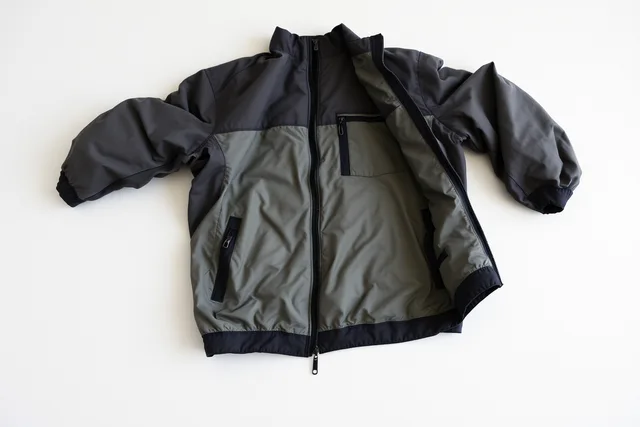
A fictional brand plans a lightweight city jacket. The concept brief calls it "fully circular" because the face fabric contains recycled polyester and the company intends to offer take-back.
The technical team rewrites the question:
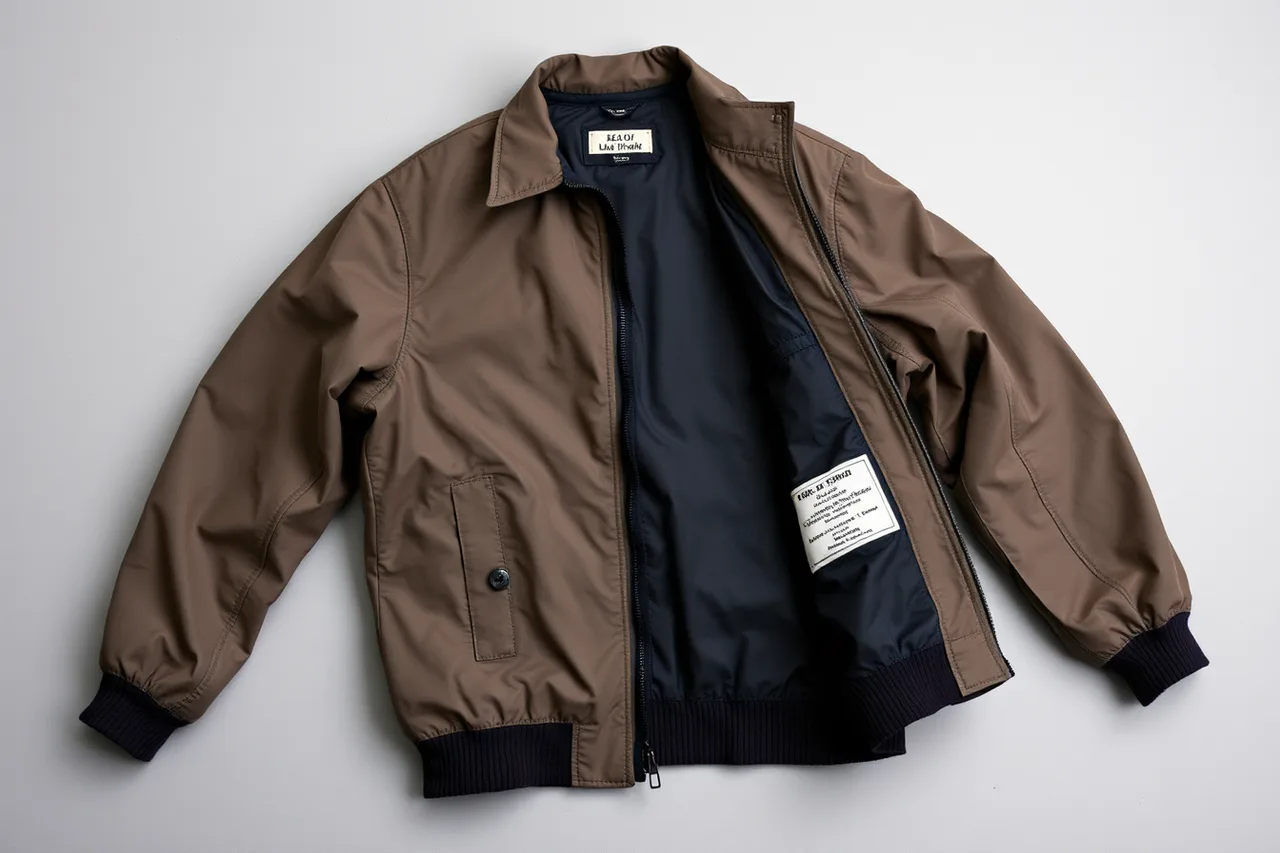
Can jacket revision J4 meet use and care requirements, permit economical replacement of its likely failure parts, retain condition for resale, and enter a confirmed material route after reuse in the markets where the service operates?
The jacket includes a woven polyester face, polyester lining, fusible interfacing, zipper, snaps, elastic cuff tabs, printed labels, sewing thread, and a water-repellent finish. The initial description "100 percent polyester" hides several components and treatments. The full-bill discipline behind this comes from the circular fashion design principles.
Evidence reviewed
| Evidence | Question answered | Limit | Status |
|---|---|---|---|
| Warranty data from earlier jacket | Likely failures | Different construction | Directional |
| J2 bill of materials | Recorded components | Missing adhesive and finish | Rejected |
| J3 care and wear tests | Performance of submitted samples | Not production lot | Passed with notes |
| Zipper repair trial | Access, time, tools, damage | One trained repairer | J3 failed |
| Resale grading trial | Condition after care and use simulation | No market demand result | J4 passed |
| Recycler input specification | Accepted materials and preparation | Capacity and geography limited | Conditional |
| Take-back partner agreement | Collection and sorting scope | Selected countries only | Accepted for named markets |
| J4 production records | Product and lot traceability | Future lots excluded | Accepted |
The team uses the waste hierarchy's tiers to keep prevention, reuse, and recycling terms distinct: prevention acts before anything becomes waste, reuse gives a product a second life as it is or with repair, and recycling reprocesses material into new products. The tiers supply definitions. They do not verify the jacket's destination.
Initial findings
Product life
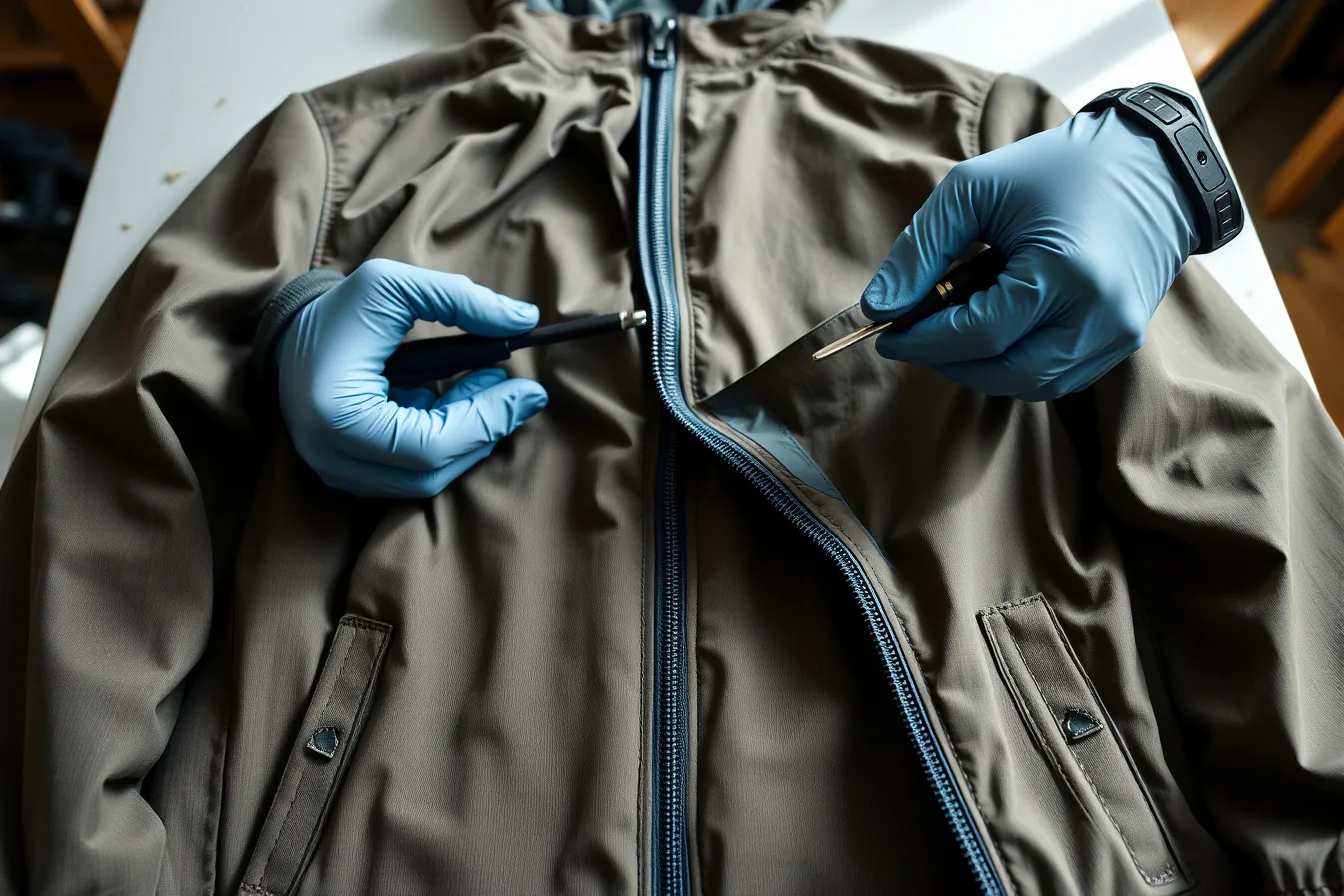
Earlier warranty records show zipper slider and cuff failures before face-fabric failure. J2 traps the zipper tape between fused front layers, making replacement destructive. The cuff tab uses a custom elastic component with no stocking plan. Failures like these are cataloged in the circular design diagnostic guide.
Reuse
Care testing shows acceptable structure and color after the planned cycles. The printed interior identity starts to wear, making later grading harder. The team changes to a durable label with a revision code while keeping skin comfort acceptable.
Material route
The recycler accepts defined polyester feedstock but rejects metal parts, elastic, heavily bonded sections, and products without finish information. The team cannot support "fully recyclable" or "closed loop." The partner also operates only in three launch markets. Finish documentation of the kind demanded here is built in the dye and finish evidence example.
Take-back
The collection contractor can receive all returned jackets but sends items through grading before any material preparation. Collection therefore cannot be reported as recycling. The contract must return item and mass outcomes by route.
Changes from J2 to J4
| Problem | Change | Verification |
|---|---|---|
| Inaccessible zipper | Revised facing and attachment sequence | Timed replacement with no panel damage |
| Custom cuff part | Standard replaceable tab with stocked specification | Removal, replacement, repeated-use test |
| Missing adhesive data | Added interfacing and adhesive to bill | Supplier and lot records |
| Weak product identity | Durable revision and care label | Care-cycle legibility test |
| Hard-part removal slow | Accessible snap and zipper removal points | Disassembly time and recovered fractions |
| Broad service claim | Limited copy to active markets and accepted items | Live customer path and contract |
The redesign does not remove every mixed component. The zipper and snaps remain because they meet function and repair requirements. Instead, the team makes them replaceable during use and removable before the confirmed recovery process.
Release findings
J4 passes the brand's safety, function, care, appearance, and component-cycle requirements. A trained repairer replaces the zipper within the target time without destroying sound panels. The standard cuff tab is available through the service inventory. Each gate here maps to a line on the circular design release checklist.
After the defined care and wear simulation, samples meet the resale grading threshold. This shows condition potential, not that every returned jacket will sell. The brand separately tracks listings, sale rate, time to sale, and rejected grades.
The recycler accepts prepared polyester fractions from the named sorting partner under its current input rules. The process still produces rejected components and losses. The claim is narrowed to participation in a collection program with repair, reuse, and material-recovery routes that vary by item condition and market.
The European Commission's page on the Waste Framework Directive and textile responsibility explains the waste hierarchy and producer-responsibility framework, including the 2025 textile-focused revision. The fictional team uses that policy context to assign post-use ownership. It does not present compliance with one jurisdiction as proof of product circularity everywhere.
Approved wording
The original text is rejected:
Fully circular jacket made from recycled material. Return it to us and it will become a new jacket.
The approved fictional copy is narrower:
Designed with replaceable zipper and cuff tabs. Repair and take-back are available in the countries listed on the service page. Returned jackets are assessed for continued use, repair, resale, or material recovery according to condition and partner acceptance. Outcomes are reported by route.
The actual service page would need current countries, instructions, costs, exclusions, and privacy terms.
Measurement plan
| Measure | Unit | Why it matters |
|---|---|---|
| Products sold in service markets | Items | Denominator for access and return |
| Repair requests and completions | Items and rate | Service use and success |
| Average repair time and part | Minutes, cost, type | Economic and design feedback |
| Take-back returns | Items and mass | Collection, not final outcome |
| Reuse and resale | Items and mass | Whole-product retention |
| Prepared recycling feedstock | Mass | Material entering processor |
| Recovered output | Mass and quality | Actual process yield |
| Residue and rejection | Mass and route | Limits and waste accountability |
What cannot be generalized
This example does not prove benefit for another jacket, color, coating, factory, repair network, country, or recycler. It does not quantify life-cycle impact or show that rental would improve the outcome. It also does not establish that recycled polyester is preferable in every use.
Partner acceptance can change. Product revisions can introduce hidden treatments or parts. The approval therefore expires when the bill of materials, construction, care, service geography, partner specification, or claim changes.
Common questions
Why keep metal parts in a recycling-oriented jacket?
They met function and repair needs and could be removed for the confirmed route. Simplification is useful only when the whole product still works.
Does resale grading prove resale?
No. It proves condition against a rule. Demand, pricing, listing, and sell-through must be measured separately.
Why report both items and mass?
Items help track product retention and service. Mass helps track material flows. Neither alone tells the whole story.
Can take-back wording promise a new jacket?
Only with evidence that the actual returned material follows that route at the claimed yield and scale. Collection intent is not enough.
What is the strongest result in the example?
The traceable scope: a defined product revision, verified repair, current service markets, partner acceptance, measured routes, and explicit limits.