Guides
Circular fashion design choices: materials, repair, resale and take-back
How designers choose between mono-material and blends, disassembly, durable trims, repairability and take-back, with the EU rules and published design guidelines that now set the criteria.
What to take away
- The Ellen MacArthur Foundation's Jeans Redesign Guidelines (second version, 2021) set measurable minimums: jeans must withstand 30 home laundries and still meet the brand's usual standard for new jeans, and fabrics must contain at least 98% cellulose-based fibers by weight so they can be recycled.
- The European Environment Agency says life-extending strategies such as durability, reuse, repair and remanufacturing should come before recycling. It also reports that almost one third of textile waste cannot be recycled fiber-to-fiber, partly because recyclability is rarely considered in design.
- Buttons, zippers and other trims that cannot be removed make a garment hard to recycle. The EEA recommends that trims and accessories be easy to remove.
- In the EU, large companies have been barred since 19 July 2026 from destroying unsold clothes and footwear. National producer responsibility schemes for textiles must be set up by 17 April 2028, with fees that can reflect durability and recyclability.
- A recycling claim needs a recycling route. In the US, the FTC Green Guides say marketers can make an unqualified "recyclable" claim when recycling facilities are available to a substantial majority, defined as at least 60%, of consumers or communities where the item is sold.
Circular design is a set of trade-offs
Circular design changes how a garment is specified, made, used, repaired, passed on and recovered. The choices pull against each other. A coating can extend use and complicate fiber recovery. A replaceable part adds a fastener and a seam. A mono-material shirt can still be thrown away because it fits badly.
The EEA's review of the role of design in Europe's circular textiles economy explains why the order matters. It places life-extending strategies first and notes that 40% of the reasons consumers give for discarding clothes are functional changes, such as holes, loss of elasticity or shape, stains and fading. That makes physical durability the first design target. For diagnosing those failures in finished garments, see the guide to garment durability and care problems.
Mono-material, blends and what the evidence says
The EMF Jeans Redesign Guidelines are the most specific published design brief for one garment type. Their recyclability section requires at least 98% cellulose-based fibers by weight in the total textile composition. It lists cotton, hemp, linen, lyocell, modal and viscose as cellulose-based, and names plastic-based fibers such as elastane as non-cellulose. The aim is to match the fabric to recycling technology that exists. Rivets are discouraged because they are difficult for recyclers to remove, so larger parts of the fabric are cut away and landfilled or incinerated.
The EEA gives the reason designers still blend: stretch, prints, layering and cost. Each is a legitimate need, and each can reduce recyclability. The table compares the common choices.
| Design choice | What it helps | What it risks | Evidence to ask for |
|---|---|---|---|
| Single fiber family (for example all cellulosic) | Simpler sorting and fiber recovery | Dyes, finishes, thread, labels and hardware still make the garment a mixture | Full bill of materials including thread and trims |
| Blend for stretch or performance | Fit, comfort, longer wear | Often cannot be recycled fiber-to-fiber | Wear and wash test results against a mono-material version |
| Removable trims | Recovery of clean fabric | Added seams or fasteners can create new weak points | Disassembly trial with time and fabric loss recorded |
| Permanent coatings or laminates | Weather or stain protection, longer use | Blocks the only realistic recovery route | Named downstream route that accepts the product |
| Repair-ready construction | Keeps the whole garment in use | Needs spare parts, instructions and repairers | A completed repair on a production garment |
Mono-material is not a complete answer. Function and useful life still count. Use fewer and more compatible materials where that supports a real recovery route without creating an early failure.
Specify durability as a test, not an adjective
The EMF guidelines show what a measurable durability requirement looks like. After 30 home laundries, jeans must still meet the participant's usual minimum durability requirements for as-new jeans. Participants must provide details of the tests carried out afterward. The guidelines give tensile strength, tear strength, dimensional stability, abrasion resistance and seam strength as examples.
Apply the same structure to any garment:
- Map the likely failure pointselbows, knees, crotch seams, pocket corners, cuffs, hems, fasteners, prints, coatings, elastic and lining attachment.
- Choose test methods for each, and write the method and pass threshold into the product specification.
- Test a production-equivalent garment, not a fabric swatch, after repeated care cycles.
- Include care information on the label that matches what the garment was tested to survive.
Disassembly, trims and information
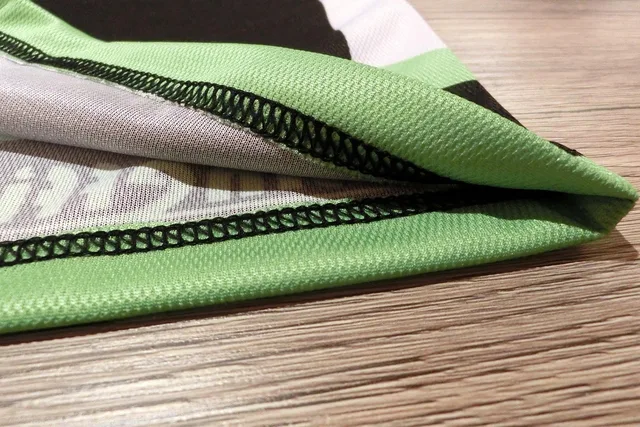
The EEA states that products with non-removable buttons, zippers or other accessories are hard to recycle, and that trims should be easy to remove. It also recommends labeling the materials and chemicals used, and whether the product is pure or mixed, so recyclers can sort it correctly. The EMF guidelines say any added component, fastening or accessory should be designed for easy removal, and that components which cannot be disassembled cause waste at the recycling stage because they are cut off.
Editorial suggestion: build a one-page disassembly record for every style. List each material, where it sits, how it is joined, and which tool removes it. A recycler or a repair shop can use that page, and it shows quickly where a design relies on permanent bonding.
Repair, resale and take-back readiness
The EMF guidelines treat circular services as an optional criterion. They name business models and incentives to support reuse, with rental and recommerce as examples, repair services to ensure garments can withstand long-term use, and take-back or collection programs so jeans can be recovered, remade and recycled. A design supports these services only when the garment is built for them.
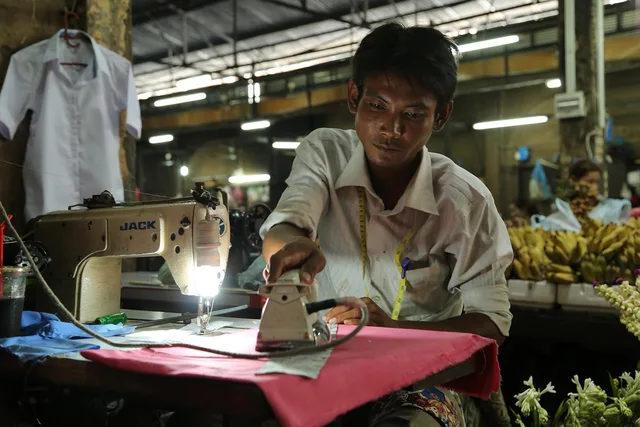
Editorial suggestion: before launch, ask a repairer to carry out the likely repair on a production garment. Record access, tools, time, damage to sound material, parts needed and whether function was restored. If bonded layers must be destroyed to reach a failing part, the repair is technically possible and practically out of reach.
For take-back, the claim should say what happens after collection. A collection box is not an outcome. Report what share was resold, repaired, remade, recycled, exported, stored or disposed of, and name the processor that accepts the material under stated conditions. This article does not name individual take-back programs, because their terms change and each should be checked on the operator's own pages.
What the rules now require
European Union. The EU Strategy for Sustainable and Circular Textiles, adopted on 30 March 2022, sets a 2030 vision in which textile products on the EU market are durable, repairable, recyclable, largely made of recycled fibers and free of hazardous substances. The 2025 to 2030 ecodesign working plan lists textiles, with a focus on apparel, as a priority product group, with requirements to be considered over the five years. The Commission reports that the ban on destroying unsold clothes and shoes applies to large companies from 19 July 2026 and to medium-sized companies from 2030, with small and micro businesses exempt. Companies must first try selling, donating or preparing items for reuse, and must keep proof if they rely on an exception.
The revised Waste Framework Directive, Directive (EU) 2025/1892, entered into force on 16 October 2025. Each member state must set up an extended producer responsibility scheme for textiles and footwear, within 30 months. The Commission says producer fees will be adjusted through eco-modulation based on criteria such as durability and recyclability. A design that is easier to repair and recycle can therefore have a cost consequence as well as an environmental one.
United States. Federal guidance on claims is the main constraint. The FTC Green Guides at 16 CFR 260.12 say a product should not be marketed as recyclable unless it can be collected, separated or otherwise recovered through an established recycling program, and that if a component significantly limits the ability to recycle the item, a recyclable claim would be deceptive. The Guides are administrative guidance, not binding law. The labeling rules for circular fashion claims cover the wording in more detail, and the state producer schemes are explained in textile EPR rules in California and New York.
A practical order of decisions
- Name the primary routefor the product: long wear, repair, resale, rental, remanufacture or fiber recycling. Different routes retain different value.
- Ask the downstream operatorwhich blends, elastane levels, colors, coatings, prints and trims it accepts. Design to those limits.
- Write the claim narrowly.Name the feature, the product scope, the evidence, the market and the limit. "Zipper replaceable by any tailor" is checkable. "Designed for circularity" is not.
- Keep the evidence file:bill of materials, test reports, repair trial notes, and records of what collected garments became.
For material choices upstream of these decisions, the bio-based fiber guide explains how feedstock and process affect care and recovery.
Sources
- [European Environment Agency, Textiles and the environmentthe role of design in Europe's circular economy](https://www.eea.europa.eu/en/analysis/publications/textiles-and-the-environment-the-role-of-design-in-europes-circular-economy-1)