Guides
Reading bio-based fibers with a sceptical eye
Bio-based fibers explained: compare natural, cellulosic, and biosynthetic routes, then assess feedstock, processing, performance, care, and disposal.
What to take away
- Bio-based describes where carbon or fiber feedstock comes from. It does not prove that a textile is low impact.
- The main routes are natural fibers, manufactured cellulosic fibers, and biosynthetic fibers.
- Renewable, biodegradable, compostable, recyclable, and organic are different claims.
- A useful assessment follows the fiber from feedstock through processing, garment use, and its realistic end route.
- Product performance still matters. A poorly suited garment can erase a promising material story through early replacement.
Bio-based fibers are made wholly or partly from biological resources. The category includes familiar materials such as cotton, wool, flax, and hemp, as well as manufactured cellulosic fibers and newer polymers made from plant-derived inputs. Those routes do not share one production method or one impact profile.
That breadth creates both interest and confusion. A shirt can be bio-based but heavily processed. A synthetic polymer can start with renewable carbon yet act like conventional plastic at disposal. A natural fiber can come from farming with serious land, water, chemical, or labor concerns.
The material label opens the investigation. It does not finish it. That investigation sits inside the broader sustainable fashion assessment, where materials are one concern among several.
What counts as bio-based
Start with the feedstock. A bio-based textile uses material from living or recently living sources rather than relying only on fossil carbon. Plants, animals, forestry material, algae, fungi, agricultural residues, and recovered cellulose can all appear in this discussion.
Three Bio-Based Fiber Families
Natural fiber
- Starting point
- Plant or animal
- How formed
- Separated and cleaned
- Examples
- Cotton, flax, wool
Manufactured cellulosic
- Starting point
- Cellulose biomass
- How formed
- Dissolved and regenerated
- Examples
- Viscose, modal, lyocell
Biosynthetic fiber
- Starting point
- Sugars or oils
- How formed
- Polymerized and spun
- Examples
- PLA, bio-polyamides
The term covers three broad families:
Typical starting point
- Natural fiber
- Plant or animal material
- Manufactured cellulosic fiber
- Cellulose-rich biomass
- Biosynthetic fiber
- Sugars, oils, or other biological inputs
How fiber is formed
- Natural fiber
- Fiber is separated, cleaned, and prepared
- Manufactured cellulosic fiber
- Cellulose is dissolved or chemically transformed, then regenerated as fiber
- Biosynthetic fiber
- Chemical building blocks are made into a polymer and spun
Familiar examples
- Natural fiber
- Cotton, flax, hemp, wool
- Manufactured cellulosic fiber
- Viscose, modal, lyocell
- Biosynthetic fiber
- Some PLA and partially bio-based polyamides or polyesters
The European Commission Joint Research Centre uses the same three-part frame in its overview of bio-based textiles. It also warns that replacing fossil inputs with biomass does not, by itself, resolve the environmental pressures of textile production.
Five terms that should not be merged
Material claims become easier to read when each term has one job.
Bio-based
This concerns origin. Ask which part of the fiber comes from biological feedstock and what percentage is bio-based. A product may contain a mix of biological and fossil-derived inputs.
EN 16575, the European standard for bio-based products, defines bio-based as derived from biomass. Verified claims usually rest on a radiocarbon test such as ASTM D6866, EN 16640, or ISO 16620-2 for plastics, and several labels certify the result: the USDA BioPreferred Program, TÜV Austria's OK biobased, and DIN CERTCO's DIN-Geprüft biobased scheme. A product page that names no standard, no test method, and no label is asking you to take its number on trust.
Renewable
A resource can be replenished on a human timescale. Renewal is not responsible production. Rate of harvest, land management, competing uses, and ecosystem effects still need attention.
For marketing, the FTC's guidance on renewable materials claims tells sellers to identify the material and explain why it is renewable. It also says to qualify the claim unless the product is made entirely of renewable materials. That section sits inside the Green Guides, 16 CFR Part 260, the reference US regulators use when they read an environmental claim.
Biodegradable
This describes breakdown by biological activity under stated conditions. It requires more detail: in soil or water, at what temperature, over what time, and into what residues? A vague claim does not answer those questions.
Compostable
Compostability is tied to defined conditions and a named test standard. In Europe that means EN 13432, in the United States ASTM D6400, the standard behind the Biodegradable Products Institute's compostable logo, and internationally ISO 17088. Each one fixes the time, temperature, and residue limits a material must meet. Industrial composting conditions are not the same as a backyard pile. A garment with dyes, finishes, elastic, thread, labels, and hardware may not share the behavior of its main fiber.
Organic
Organic refers to agricultural production under a named standard. For fiber that is the USDA Organic rule, enforced through the National Organic Program in the United States, and Regulation (EU) 2018/848 in the European Union. For a finished textile the claim usually runs through the Global Organic Textile Standard (GOTS), which grades products by how much certified organic fiber they contain and adds processing and social criteria of its own. A fiber certificate and a garment certificate do not answer the same question.
Follow the material through its real route
A sound review looks at the chain, not only the source material.
1. Feedstock
Identify the crop, animal material, forestry source, residue, waste stream, or industrial intermediate. Ask where it came from and whether the claim applies to the whole fiber or only one input.
For a crop, relevant questions may include land use, irrigation, fertilizer, pesticides, soil management, and labor. For wood-derived cellulose, forest origin and chain of custody matter. For residues, ask whether the material is genuinely left over, whether it already had another use, and how it is collected.
2. Conversion
The route from biomass to spinnable fiber can be mechanical, chemical, biological, or a combination. Flax and hemp require separation of usable bast fiber from the stalk. Manufactured cellulosics require pulp preparation and a fiber-forming process. Biosynthetics require conversion into chemical building blocks, polymerization, and spinning.
Record energy, water, solvents, reagents, emissions controls, and recovery systems where information exists. Do not assume a biological input means mild processing.
3. Fabric and finish
Yarn formation, knitting or weaving, pretreatment, dyeing, printing, coating, and finishing can change the product's impact and disposal options. A finish may improve stain resistance or durability while complicating recycling. A blend may improve stretch while making fiber separation harder.
4. Garment design and use
The material must do the job. Consider abrasion, dimensional stability, moisture behavior, colorfastness, pilling, recovery, wash needs, and repair. These properties depend on the full fabric and garment, not merely the feedstock name.
5. End route
Write down what can happen where the owner lives. Reuse and repair are often more immediate than fiber recycling. A compostability claim is of little practical use if the finished product is ineligible, the required facility is unavailable, or the local collector rejects textiles.
Named routes are easier to check than good intentions. In the United States, retailer take-back programs such as Patagonia's Worn Wear and H&M's garment collecting accept their own products, charity collectors such as Goodwill and the Salvation Army resell or pass on usable textiles, and some cities and counties run textile drop-off sites. Certification schemes also publish registers of certified products, so a content or compostability claim can be checked against a list rather than a brochure.
Compare evidence, not plant names
A material scorecard should preserve differences that a single green rating hides.
Strong vs Weak Material Evidence
Stronger evidence
- What is bio-based
- Named component and percentage
- Origin
- Region or verified chain
- Conversion
- Process route and controls
- Performance
- Product-relevant test
- After use
- Accepted accessible route
Weak evidence
- What is bio-based
- Plant imagery or vague nature
- Origin
- No origin beyond crop name
- Conversion
- Clean technology without scope
- Performance
- Fiber-level promise for all
- After use
- Biodegradable without conditions
The most useful disclosure has boundaries. It says what was measured, where the data begin and end, which product version was tested, and what is still unknown. A precise partial answer is more useful than a sweeping promise. Related reading: bio-based fibers compared by route.
Natural fibers: look past familiarity
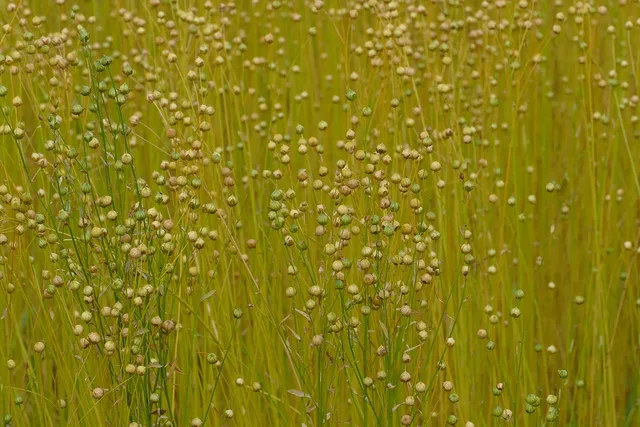
Natural fibers arrive in a recognizable form, but they still pass through several steps before becoming cloth. Cotton must be ginned, cleaned, spun, and finished. Bast fibers such as flax and hemp require retting or another separation method, breaking, scutching, hackling, and spinning. Wool requires shearing, sorting, scouring, and preparation.
Farming and husbandry vary by place and producer. Compare like with like.
An irrigated crop in a water-stressed region poses a different question from a rain-fed crop elsewhere. A fiber grown near a mill may travel long distances for spinning, weaving, dyeing, or sewing, and the natural textile fibers guide follows cotton, wool, flax, and hemp through those steps in detail.
Manufactured cellulosics: separate source from process
Viscose, modal, lyocell, and related fibers begin with cellulose. That can invite the mistaken idea that all of them are simply natural fibers. In practice, cellulose is processed into a solution or derivative and formed into new filaments or staple fiber.
Two issues need separate records:
Separate source from process
- the origin and management of the cellulose feedstock
- the chemical and emission controls used to make the fiber
A well-managed feedstock does not establish good processing, and a tightly controlled process does not establish responsible forestry. Keep both lines of evidence.
Biosynthetics: ask how much is biological
Biosynthetic fibers use chemical building blocks made wholly or partly from biological inputs. The resulting polymer may be chemically identical to a fossil-derived version, or it may be a different material with its own properties.
Ask whether the bio-based percentage is reported by mass, carbon content, or another method. Then ask which part of the polymer is bio-derived. A partly bio-based polymer should not be described as fully renewable without support.
Disposal claims need special care. Bio-based plastics are not automatically biodegradable. Some biodegradable materials require controlled heat, moisture, and microbial conditions. Treat origin and end behavior as separate specifications. When a biosynthetic fiber is certified, the certificate names the test method and the bio-based share; when it is not, the claim is marketing.
Performance belongs in the material decision
Environmental intent cannot rescue a garment that fails its job. Build requirements before comparing fibers.
For a summer shirt, breathability, opacity, wash behavior, and seam stability may lead. For leggings, recovery and abrasion matter. For a coat, weather resistance, warmth, lining strength, and repair access may dominate.
Test the finished product where possible. A fiber's general reputation cannot predict fabric weight, yarn twist, knit structure, finish, or construction. Those choices can change feel and service life.
Questions for brands and suppliers
Use short questions that can produce checkable answers:
- What percentage of the finished product is bio-based?
- Which components does that percentage cover?
- What is the biological feedstock?
- Where was the feedstock grown, raised, collected, or recovered?
- Which process turns it into fiber?
- Are solvent recovery, wastewater, or emissions controls documented?
- What performance tests apply to this exact fabric or product?
- Which dyes, coatings, or blends affect the claimed end route?
- Where can a customer use that route today?
If the answer changes from a precise claim to a broad company story, note the gap.
A cautious buying method
First decide whether a purchase is needed. Then identify the garment's job and likely use. Check composition, construction, care, and fit before giving weight to a novel feedstock. Request evidence for the narrow claims that influence the decision. The step-by-step bio-based evaluation orders these checks so no single claim jumps the queue.
Do not reward disclosure by pretending it is complete. A company may provide credible feedstock records while lacking product-level durability data. That is better than silence, but it remains a limited finding.
Keep the purchase decision reversible where possible. Check return terms, save care information, and inspect the item early. If the product fails, document the condition and contact the seller while records are fresh.
Common questions
Are all plant fibers bio-based?
Yes, plant fibers have biological feedstock. That fact alone does not establish responsible farming, low-impact processing, durable use, or a workable disposal route.
Is viscose a natural fiber?
Viscose begins with natural cellulose, but industry classifications usually place it among manufactured cellulosic fibers because the cellulose is processed and regenerated into fiber.
Does bio-based mean plastic-free?
No. A biosynthetic polymer can be a plastic even when some or all of its carbon comes from biological inputs. Blends and finishes may add other plastics as well.
Can a bio-based garment go in a home compost bin?
Only if the finished item has reliable instructions for home composting and every relevant component is compatible with that route. A fiber-level claim is not enough.
What should I check first on a product page?
Look for the exact fiber composition and bio-based percentage. Then check the feedstock, conversion route, product performance, care, and the conditions attached to any disposal claim.
In this guide
- Nine steps for evaluating bio-based fibers, from claims to end routeBio-based fiber evaluation: use a nine-step process to check feedstock, conversion, claims, garment performance, care, traceability, and end-of-use options.
- Comparing the main routes for bio-based fibers on cost, fit and follow-throughBio-based fiber routes compared by real cost drivers, garment fit, and what happens after the sale, from cotton and lyocell to PLA and bio-PET.
- Points worth confirming before you commit to bio-based fibersBio-based fiber checklist: verify composition, feedstock, conversion, product tests, care, claims, traceability, and realistic end routes before choosing.
- Diagnosing bio-based fiber problemsDiagnose bio-based fiber problems by separating material, product, claim, and end-of-life failures, then match each to evidence and a specific correction.
- Bio-Based Fibers Example: Building a Claim Evidence FileA bio-based fibers example: the documents, certification schemes, test methods, and claim rules that hold one garment's evidence file together.