Features
Part of Reading bio-based fibers with a sceptical eye
Bio-Based Fibers Example: Building a Claim Evidence File
A bio-based fibers example: the documents, certification schemes, test methods, and claim rules that hold one garment's evidence file together.
What to take away
- This is a fictional worked example, not a product endorsement.
- One product record can be strong in some areas and incomplete in others.
- Evidence should connect to the exact product, date, and supply-chain stage.
- A traceable feedstock does not prove low-impact processing or good garment performance.
- The final claim must remain narrower than the full marketing story.
This bio-based fibers example follows a fictional woven overshirt made with flax and a manufactured cellulosic fiber through seven review stages. Each stage shows which document, certification scheme, test method, or legal test the claim depends on.
The goal is to show structure, not invent evidence for a real garment. It relies on the bio-based fiber families and terms from the main guide.
The product brief
The product team wants a lightweight overshirt for repeated spring and fall use. It should tolerate ordinary machine washing, remain presentable without professional cleaning, allow button replacement, and last through regular urban wear.
The proposed shell fabric contains two bio-based fibers:
- flax for texture and stiffness
- a manufactured cellulosic fiber, such as lyocell or viscose, for drape and a smoother hand
The sewing thread, buttons, labels, and interfacing are separate components. They are included in the product record rather than hidden behind the shell-fabric description.
Evidence file at the start
The team receives the following:
- A fabric specification with fiber percentages
- A yarn supplier declaration
- A flax origin record naming a growing region and processor
- A cellulosic supplier document naming the fiber producer and pulp control system
- A dyehouse record for the selected color
- Fabric test reports for wash shrinkage, colorfastness, tear, and abrasion
- A factory bill of materials
- A garment care trial
- Local textile-collection rules
Some records are product-specific. Others apply to a supplier or facility. The review labels that difference.
The rules a bio-based claim has to satisfy
A claim about bio-based content is a regulated statement, not a marketing flourish. In the United States it falls under the FTC Green Guides, the Guides for the Use of Environmental Marketing Claims at 16 CFR Part 260, which require a marketer to hold substantiation before making the claim and to keep every qualification attached to it.
Self-declared claims are also framed by ISO 14021, the standard for environmental labels and declarations that covers what a company says about its own product.
For a garment sold in Europe, the same file has to answer the EU's Empowering Consumers for the Green Transition Directive, the proposed Green Claims Directive on substantiating environmental claims, and the Ecodesign for Sustainable Products Regulation (ESPR), whose Digital Product Passport is meant to carry supply-chain data with the product.
The file below is organized so those tests can be run on one claim at a time.
Stage 1: define what bio-based covers
The shell fabric is fully made from fibers with biological feedstock. The complete garment is not described as 100 percent bio-based because the team has not established that status for thread, interfacing, labels, and buttons.
This distinction avoids a common scope error. A shell-fabric result should not become a whole-product claim.
Fiber content on a US label is governed by the Textile Fiber Products Identification Act, which requires each fiber to be named and its percentage given. The file follows the same discipline: the fabric specification states the flax and cellulosic fiber percentages, and the claim quotes them instead of describing the blend loosely.
The review covers three material groups: natural fibers, manufactured cellulosics, and biosynthetics. A Joint Research Centre policy brief on bio-based textiles draws the same line, sorting fibers into natural, semi-synthetic, and synthetic types. These types come through very different value chains, each with its own resources, opportunities, and knowledge gaps.
In this case, only the first two groups appear.
Stage 2: trace each feedstock
Flax line
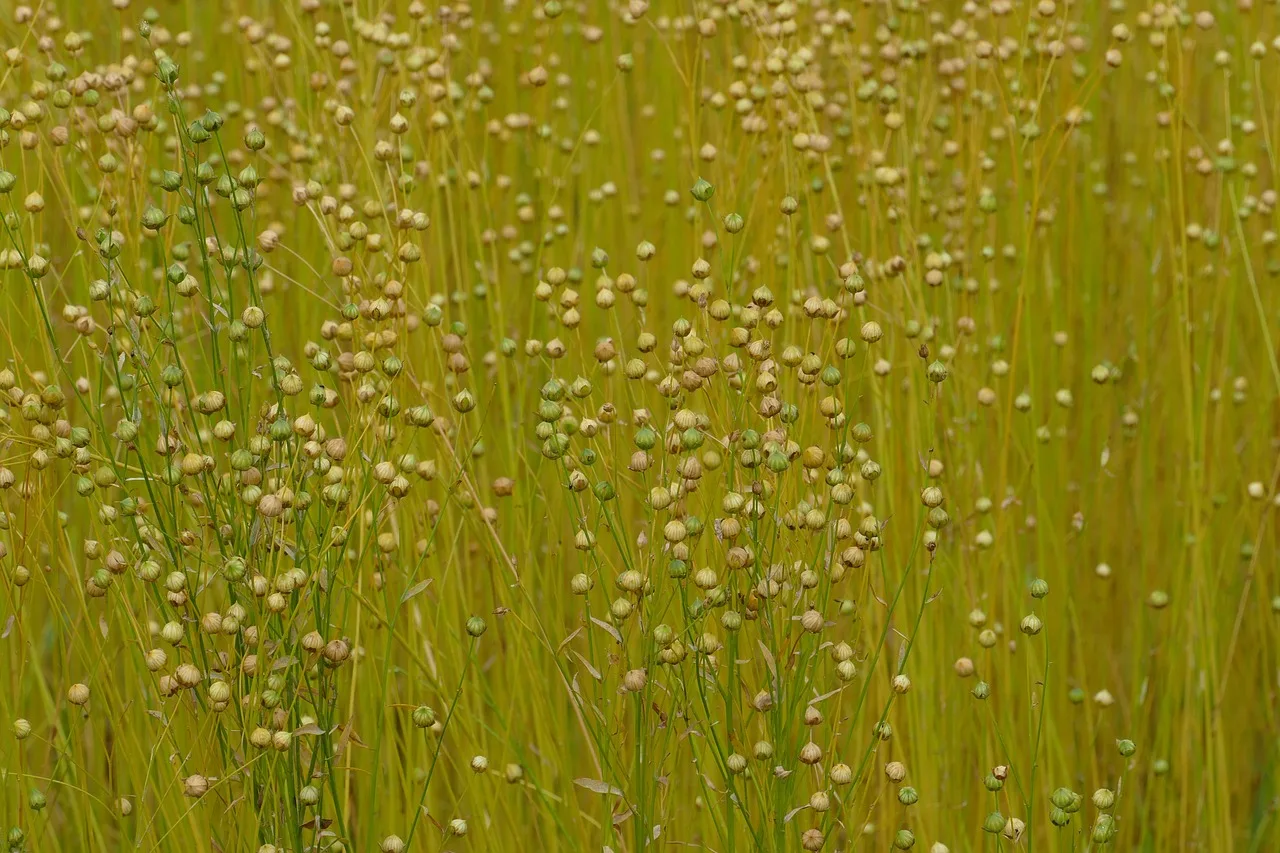
The record connects the fabric order to a yarn supplier, the yarn to a fiber processor, and the processor to a stated growing region. It documents mechanical preparation and identifies the retting route.
The record does not reach individual farms. The final summary therefore says "region-traced flax" rather than "farm-traced flax." It makes no claim about every field practice.
Where a flax line is certified rather than only region-traced, the file names the scheme: European Flax certification, administered by CELC, for traceable European flax, or the Global Organic Textile Standard (GOTS) if the fiber is organic. Certification and region tracing are logged as separate rows, because they prove different things.
Cellulosic line
The record identifies the fiber producer and the chain-of-custody certificate behind the wood pulp: Forest Stewardship Council (FSC) or Programme for the Endorsement of Forest Certification (PEFC) certification of the pulp, saved with its certificate number and validity dates. It also includes a supplier statement describing the fiber-production process, whether that is lyocell's solvent spinning with solvent recovery or a viscose process. Had the fiber been recycled, the Global Recycled Standard (GRS) or the Recycled Claim Standard (RCS) would sit in the same place in the file.
The record does not contain independent facility emissions data for the relevant period. The summary treats feedstock sourcing and manufacturing controls as separate lines. It reports the former and marks the latter as partly verified.
Stage 3: check why the blend exists
The product team tests a flax-only fabric and the proposed blend at the same intended weight. The flax-only option has the dry handle the designer wants, but it does not meet the selected drape requirement. The blend performs better in that respect.
The team records this as a product-design choice, not an environmental benefit. It also records the tradeoff: a blended fabric may be harder to route into some fiber-recycling processes than a compatible single-fiber textile.
The blend stays because it supports the defined product, not because mixed fiber is presumed good or bad.
Stage 4: test the fabric and garment
Fabric testing follows named methods rather than a house protocol: AATCC TM135 for dimensional change after home laundering, AATCC TM61 for colorfastness to laundering, ASTM D1424 for tear strength, and ASTM D4966 for abrasion resistance. The pass and fail thresholds are written into the product specification before any sample is tested, so every result in the file is judged against a target that was set in advance. The garment trial then checks issues that fabric swatches cannot settle:
- seam behavior after washing
- collar and placket shape
- button security
- sleeve and body twist
- pressing needs
- comfort over a base layer
- drying under normal indoor conditions
One sample shows puckering along the front placket. Investigation finds that the interfacing and shell change dimensions differently during washing. The team changes the interfacing and repeats the care trial.
This is not recorded as a fiber failure. The problem sits at the interaction between shell, support material, construction, and care, so it is logged as a construction fix and the fiber claim is left untouched by it.
Stage 5: review the color and finish
The dyehouse record applies to the exact color, not merely to the facility, and it carries the chemical-control documents: an OEKO-TEX STANDARD 100 certificate for the finished fabric, the dyehouse's conformance with the ZDHC Manufacturing Restricted Substances List (MRSL), and bluesign approval of the process. The team saves the formula reference and test date. No performance finish is added beyond what the product brief requires.
The public material description does not call the fabric chemical-free or non-toxic. Those phrases are too broad for the available evidence. Instead, the technical file lists the documented process controls and test results by scope.
Stage 6: build a care plan
The care trial uses the proposed label instructions. Samples are measured before and after washing and checked for shape, color, seam condition, and pressing effort. The team also tests a lower-effort routine that a customer is likely to use.
The final label avoids an unnecessarily delicate instruction. Spare buttons are included, and the placket construction allows a tailor to reach the button and buttonhole areas. The record notes that severe fabric tears may be visible after repair because of the woven texture.
Stage 7: check the end route
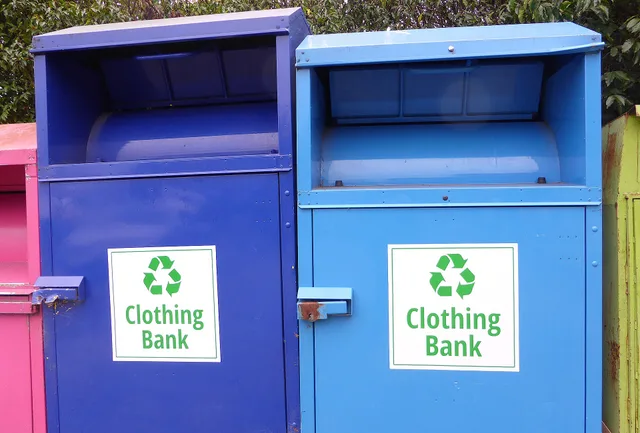
The team begins with continued use, repair, resale, and donation. It then checks the local textile collector's current rules. In the United States that route is usually a municipal or county drop-off program, a charity operator such as Goodwill or the Salvation Army, or a commercial sorter that grades textiles for reuse. The collector accepts clean, dry clothing for sorting but does not promise fiber-to-fiber recycling for this blend.
The product page therefore does not call the shirt recyclable. It explains that local outcomes depend on condition and collector routes. It does not call the garment compostable because the complete item has not been tested for that route and contains other components.
This restraint reflects a wider materials problem. Textile Exchange's biosynthetics resource page separates renewable feedstock work from circularity and end-of-life questions. The product example follows that logic even though it contains no biosynthetic fiber: origin and disposal remain independent evidence lines.
The final evidence matrix
| Area | Evidence strength | Supported conclusion | Remaining limit |
|---|---|---|---|
| Shell composition | Product-specific | Two named bio-based fibers at stated percentages | Does not cover all garment components |
| Flax origin | Supply-chain record to region | Region-traced feedstock | No individual farm record |
| Cellulose source | Supplier and chain record | Controlled pulp-sourcing system identified | Facility data only partly reviewed |
| Blend function | Comparative fabric test | Blend meets the defined drape need | Recovery route may be narrower |
| Performance | Fabric and garment tests | Suitable for stated care and use | Does not predict every owner or years of wear |
| Dyeing | Color-specific facility record | Selected process and test file identified | Not a complete chemistry assessment |
| Repair | Construction review | Buttons and common seam damage are accessible | Major fabric damage may remain visible |
| End route | Local rules checked | Reuse and collection are available | Fiber recycling not promised |
A claim that fits the evidence
A defensible product note might read:
"The shell fabric combines region-traced flax with a manufactured cellulosic fiber from a documented pulp-sourcing system. The blend was selected to meet the overshirt's drape and wash-performance requirements. Other garment components are listed separately. Local textile collection is available, but fiber-to-fiber recycling and composting are not claimed."
That statement is less dramatic than "a circular plant-based shirt." It is also more useful. A reader can see what is known, what applies only to the shell, and what remains unavailable.
What the example does not prove
The file does not prove the shirt has the lowest impact among all alternatives or compare keeping an existing shirt, buying secondhand, or choosing another fabric.
It does not establish labor conditions unless separate social evidence is reviewed, and it does not predict unlimited durability. The repair-or-replace worked example shows what comparing those routes looks like.
The example shows how to keep evidence attached to the right claim. A full decision would still compare ways of meeting the need.
How to reuse the structure
For another product, keep the same sequence:
- Define the job.
- List every material component.
- Trace each bio-based input.
- Record the conversion route.
- Explain the function of any blend.
- Test the finished fabric and product.
- Check care and repair.
- Confirm the local end route.
- Write a claim no wider than the evidence.
Change the tests and questions to suit the product. An activewear knit, rain shell, upholstery fabric, or shoe upper needs a different performance file. A grown or fermented material would need the biofabricated evaluation method instead.
Common questions
Is the overshirt a real product?
No. It is a fictional example built to demonstrate an evidence record. It makes no claim about a brand or supplier.
Why not calculate one sustainability score?
A single score can hide evidence gaps and tradeoffs. The matrix keeps feedstock, processing, performance, care, and disposal visible.
Does region-traced flax count as traceable?
It is traceable to the stated region and processor, not to an individual farm. The claim should name that boundary.
Why keep the blend if recycling may be harder?
The blend has a documented product function. The team records both its performance benefit and its recovery limit instead of pretending one cancels the other.
What would strengthen the example most?
Batch-level feedstock links, time-matched facility data, longer wear evidence, and a confirmed recovery route for the finished product would reduce the largest remaining gaps.