Guides
9 things about garment durability and care worth your time
Garment durability and care explained: connect fiber, fabric, construction, color, finish, use, cleaning, drying, storage, repair, tests, and honest labels.
What to take away
- Durability belongs to the finished garment in a defined use, not to fiber strength alone.
- Care instructions should describe a process the whole product can tolerate repeatedly.
- Abrasion, pilling, seam failure, shrinkage, fading, and coating loss are separate modes.
- A strict care label can prevent damage but may make ordinary use impractical.
- Test likely failure points before sale and collect repair and return data after launch.
Garment durability is the ability to remain safe, functional, comfortable, and acceptable through expected wear, care, storage, and repair. It has physical and user dimensions.
Care and durability influence each other. Washing removes soil and body oils that can damage or discolor material, but water, chemistry, movement, heat, and drying can also change fibers, color, dimensions, elastic, prints, and finishes. The correct goal is suitable care for the complete product.
1. Map the garment system
Map the garment system
| Layer or part | Durability question | Care question |
|---|---|---|
| Face fabric | Abrasion, tear, pilling, snagging | Wet strength, color, heat |
| Lining | Seam slippage, friction, tearing | Differential shrinkage, staining |
| Thread and seams | Strength, stretch, fatigue | Dimensional compatibility |
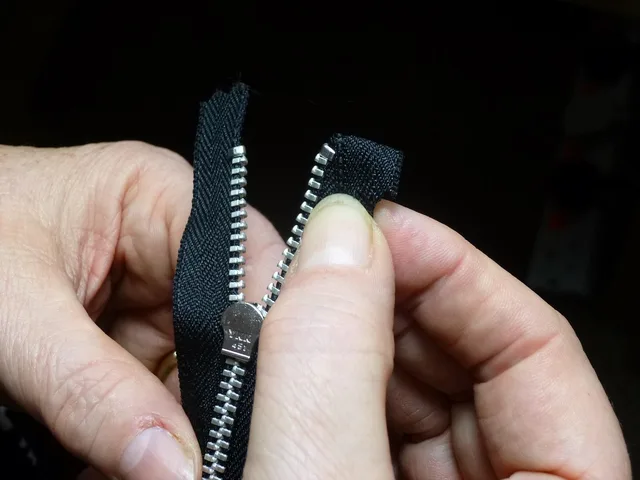
| Fasteners | Cycle life, attachment, corrosion | Heat, solvent |
| Elastic | Recovery and fatigue | Heat, bleach, detergent |
| Print or coating | Flex, adhesion, surface wear | Solvent, ironing, tumble |
| Interfacing and adhesive | Shape and bond | Delamination, temperature |
| Labels and trim | Legibility, edge damage | Color transfer, deformation |
The weakest necessary component can determine useful life. Test the assembly rather than presenting a fabric report as a garment result. Fiber-level contributions to each row are covered in the natural fiber handbook.
Garment Layers and Durability
Layer or part
- Face fabric
- Abrasion, tear, pilling
- Lining
- Seam slippage, friction
- Thread and seams
- Strength, stretch, fatigue
- Fasteners
- Cycle life, corrosion
- Elastic
- Recovery and fatigue
- Print or coating
- Flex, adhesion, wear
Durability question
- Face fabric
- Wet strength, shrinkage, heat
- Lining
- Differential shrinkage, staining
- Thread and seams
- Dimensional compatibility
- Fasteners
- Heat, solvent, wash impact
- Elastic
- Heat, bleach, detergent
- Print or coating
- Washing, solvent, ironing
Care question
- Face fabric
- Lining
- Thread and seams
- Fasteners
- Elastic
- Print or coating
2. Define expected use
Write a use profile before choosing methods and limits:
Define Expected Use Profile
- User and size range
- Frequency and duration of wear
- Movement and friction zones
- Climate, sweat, rain, sun exposure
- Contact with bags, seats, tools
- Soil type and cleaning frequency
- Expected service period
A formal blouse, trail shirt, uniform, and children's play garment need different specifications even when their fiber labels match.
3. Main failure families
Fabric breakdown
Abrasion removes or breaks fibers. Tears start at damage, stress concentration, or a cut edge. Bursting matters where force spreads in several directions, especially in knits. Snagging pulls yarn from the structure.
Main Failure Families
Failure family
- Fabric breakdown
- Abrasion, tears, bursting, snagging
- Surface change
- Pilling, fuzzing, glazing, print wear
- Shape and fit change
- Shrinkage, growth, spirality, puckering
- Color change and transfer
- Light, laundering, rubbing, perspiration
- Functional loss
- Water repellency, flame behavior, antimicrobial
Examples
- Fabric breakdown
- Surface change
- Shape and fit change
- Color change and transfer
- Functional loss
Surface change
Pilling begins when loose fibers work to the surface, tangle, and remain attached. Brushing, fuzzing, glazing, frosting, and print wear are different changes and need their own descriptions. This and the next change family often follow the same care exposures as fabric breakdown.
Shape and fit change
Shrinkage, growth, spirality, seam puckering, loss of stretch recovery, and differential movement between layers can make a garment unusable without breaking it. Shape change can arise from the same washing and drying actions that drive fabric breakdown and surface change.
Color change and transfer
Light, laundering, rubbing, perspiration, heat, chlorine, and storage contact create different color risks. Passing one colorfastness exposure does not prove another. AATCC's colorfastness training overview treats perspiration, water, pool water, laundering, crocking, and light exposure as separate test methods for exactly this reason.
Functional loss
Water repellency, flame behavior, antimicrobial treatment, crease recovery, ultraviolet protection, and protective barriers may decline before the base textile fails. Test the claimed function after relevant care and wear. These functions come from finishes; the textile finish guide explains how they are applied and how they wear.
Both the natural fiber handbook and the textile finish guide are on this site, linked above.
4. Build a care instruction from evidence
Care selection is a product-development decision. Begin with the least restrictive practical process that keeps every component within its limits. Consider wash method and temperature, bleach, detergent, drying, ironing, professional cleaning, and warnings.
Build Care Instruction from Evidence
- Start with least restrictive practical process
- Consider wash method, temperature, bleach, detergent
- Evaluate drying, ironing, professional cleaning
- Ensure reasonable basis for care information
- Include warning if cleaning step harms product
- Avoid default dry clean only
Under FTC's care labeling rule, 16 CFR 423.5 makes it an unfair practice to sell covered apparel without a reasonable basis for disclosed care information. It also requires a warning when a cleaning step a consumer could reasonably use would harm the product.
Apply the current rule to covered products and markets, and a laboratory report needs to match the production garment.
Avoid "dry clean only" as a default for uncertainty. If washing works, unnecessary professional-care language adds cost and can reduce use. Conversely, do not choose machine washing because the face fabric survives if lining, trim, adhesive, or color transfer fails.
A compliant label might read: 'Machine wash cold, gentle cycle, tumble dry low, do not bleach.' A vague claim such as 'easy care' does not tell the buyer what process the garment can tolerate.
5. Test sequence
Test sequence
- Inspect and measure the new garment.
- Run required safety and chemical gates.
- Test initial strength, surface, color, dimensions, and function.
- Care garments through the planned cycle count.
- Recondition and inspect consistently.
- Repeat key measurements.
- Conduct realistic wear or use trials.
- Repair likely failures and check restored function.
Record method versions, loads, detergent, water, drying, conditioning, sample size, rating scales, limits, and deviations. Three care cycles may support a narrow release check but cannot prove a lifetime claim.
For a mid-market cotton shirt, a typical test might run 25 home launderings at 40 °C. Limits might be 3% maximum shrinkage in length and 2% in width. A pilling rating of 4 or better on a 1 to 5 scale is common.
Name the method for each property. Use AATCC TM 135 for fabric dimensional change and TM 150 for garment dimensional change. Use TM 124 or TM 143 for appearance after repeated laundering. Use TM 8 for crocking, TM 61 for laundering colorfastness, TM 16 for light, TM 15 for perspiration, and TM 107 for water.
Test Sequence
- Inspect and measure new garment
- Run safety and chemical gates
- Test initial strength, surface, color
- Care through planned cycle count
- Recondition and inspect consistently
- Repeat key measurements
- Conduct realistic wear trials
6. Care choices and tradeoffs
Possible advantage
- Lower wash temperature
- Less thermal stress and energy
- Gentle cycle
- Less movement and friction
- Air drying
- Avoids tumble heat and action
- Low tumble heat
- Faster and controlled
- Washing less often
- Fewer care exposures
- Spot cleaning
- Limits whole-garment exposure
Possible risk
- Lower wash temperature
- Some soils or hygiene needs require another process
- Gentle cycle
- Low load and extra water may affect efficiency
- Air drying
- Hanging can stretch some knits; slow drying can create odor
- Low tumble heat
- Repeated heat and movement can shrink or abrade
- Washing less often
- Soil, sweat, odor, or contamination may accumulate
- Spot cleaning
- Can leave rings, shift color, or damage coatings
Care within the label, separate incompatible loads, close fasteners when appropriate, avoid overloading, remove items promptly, and repair small damage before it spreads. Product-specific instructions take priority over general tips.
Care Choices and Tradeoffs
Choice
- Lower wash temperature
- Less thermal stress
- Gentle cycle
- Less movement and friction
- Air drying
- Avoids tumble heat
- Low tumble heat
- Faster and controlled
- Washing less often
- Fewer care exposures
- Spot cleaning
- Limits whole-garment exposure
Possible advantage
- Lower wash temperature
- Some soils require another process
- Gentle cycle
- Low load affects efficiency
- Air drying
- Hanging can stretch knits
- Low tumble heat
- Repeated heat can shrink
- Washing less often
- Soil and odor may accumulate
- Spot cleaning
- Can leave rings or damage coatings
Possible risk
- Lower wash temperature
- Gentle cycle
- Air drying
- Low tumble heat
- Washing less often
- Spot cleaning
7. Storage
Store clean, dry garments away from damaging light, damp, pests, and crushing. Support heavy knits rather than stretching them on hangers. Avoid long sharp folds in fragile material. Do not seal damp textiles in airtight containers.
8. Repair
Repair decisions depend on the failure. Restitching an open seam differs from patching abraded fabric or restoring a protective layer. Stop ordinary repair if damage affects protective equipment, active heating, severe contamination, or a legally controlled performance. For a worked repair-or-replace call, see the commuter jacket example.
9. Claims that need limits
Replace "built to last" with a test and scope. Replace "easy care" with the actual process. Replace "fade proof" with the exposure and rating. Replace "lifetime warranty" with clear coverage, exclusions, remedy, geography, and term.
Useful records include test reports, retained samples, production lots, care-label approval, repair instructions, component availability, warranty outcomes, and structured reasons for return or discard. Those records also feed circular fashion design, where durability is the first retention route.
Common questions
Does a strong fiber make a durable garment?
Not by itself. Yarn, fabric, seams, fit, trims, finishing, use, care, and repair access affect the finished product.
How many wash cycles prove durability?
No universal number proves a garment's life. Choose cycles and measurements from expected use, risk, method, buyer requirements, and known failure modes.
Is cold washing always correct?
No. Follow the label and consider soil, hygiene, detergent, machine, and product needs. Cold water is not suitable for every case.
Can pilling be removed safely?
Surface pills can sometimes be trimmed with care, but removal also removes fiber. Diagnose the textile and avoid cutting sound yarns.
What should be tested after care?
Repeat the properties likely to change, including dimensions, appearance, color, seams, elastic recovery, adhesion, and any claimed function.
In this guide
- How to evaluate garment durability and care step by step, in plain termsEvaluate garment durability and care step by step: define use, map parts, predict failures, set tests, run care cycles, inspect wear, and approve labels.
- Garment Durability and Care Comparison GuideThis garment durability and care comparison covers wash, dry, and finish routes, US cost figures, and care guidance for bio-based fibers.