Features
Part of Textile reuse and recycling: how to choose a route
No shortcuts here: reuse and recycling comes down to the basics
Textile take-back example: audit a fictional program's 12,400-pound claim, reconcile inventory and routes, correct recycled totals, and publish defensible wording.
What to take away
- A collection receipt does not establish reuse or recycling.
- Opening and closing inventory belong in the material balance.
- Transfer to a broker is an intermediate event unless the final route is verified.
- A corrected claim should state period, boundary, unit, route, and unknown amount.
- Program improvements should reduce unknowns and prevent premature disposal.
This fictional case shows how a small apparel brand reviews one year of customer take-back data. The names, quantities, contracts, and findings are invented. The method is educational, not legal, accounting, waste, customs, or assurance advice. Its category definitions come from the reuse and recycling fundamentals.
The proposed claim
North Loop Apparel plans to publish:
We recycled 12,400 pounds of clothing in 2026, keeping every returned item out of landfill.
The marketing team based the sentence on pickup receipts from six stores. Before approval, the reviewer asks for the program boundary and downstream records.
The operating context
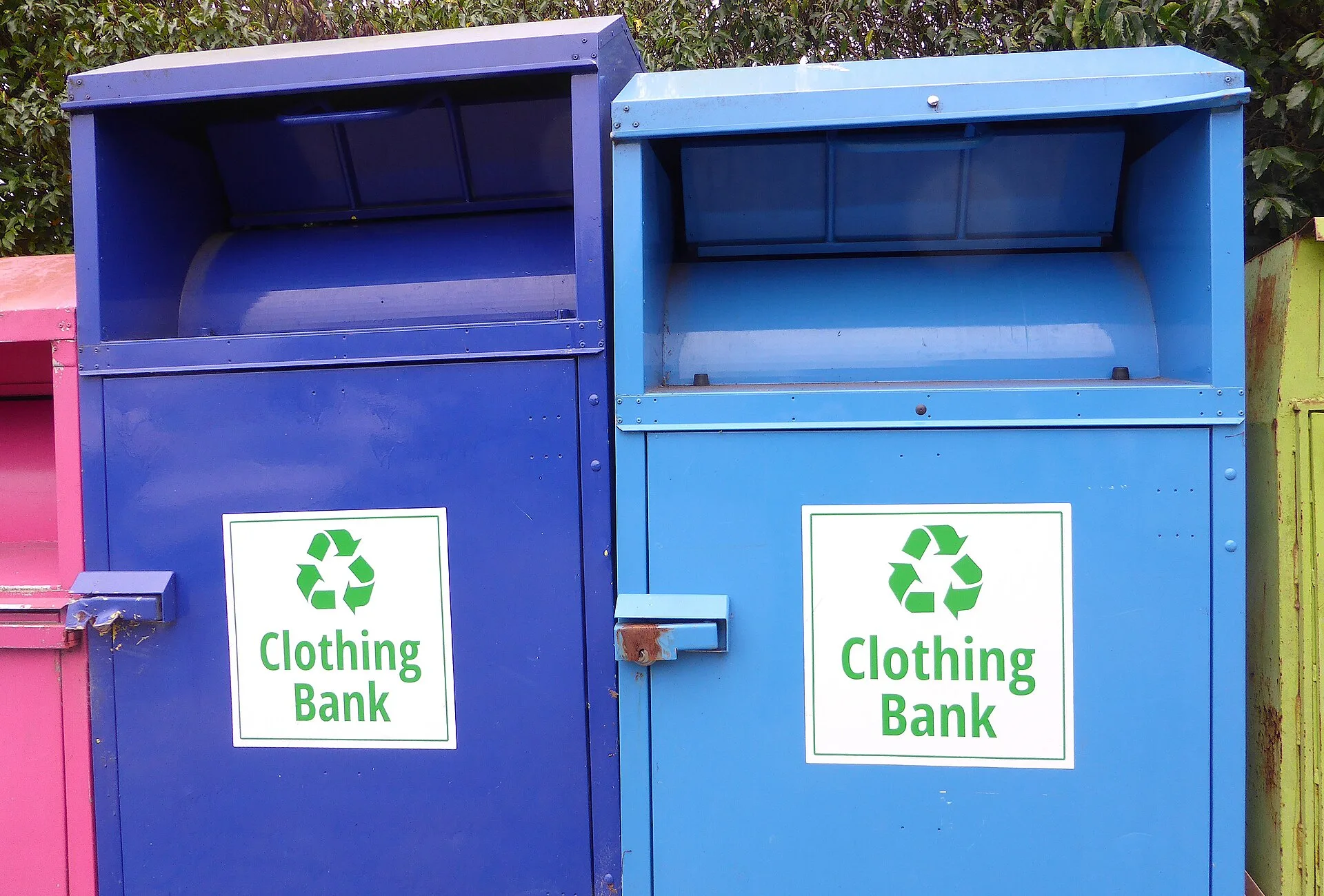
The bins accepted clean, dry clothing from any brand. Signs used the words "reuse and recycle" but did not explain condition grades. Store staff sealed bags and a contractor transported them to a regional sorter.
UNEP's global textile stocktaking report examines impacts across the value chain and distinguishes circular action from a narrow end-of-life focus. For this fictional audit, that means the team also reviews repair, product life, returns, and purchasing incentives instead of treating take-back weight as the whole program.
Record set
The reviewer requests:
- store pickup tickets and scale method
- opening and closing warehouse inventory
- sorter receiving and grading reports
- invoices and transfer records for reuse buyers
- processor receipts and output statements
- export destinations and classifications
- residual treatment tickets
- rejected and quarantined material logs
- public signs, customer terms, and staff instructions
The contract permits aggregation, so the sorter reports allocated results for North Loop rather than preserving every customer bag.
First reconciliation
Pickup receipts total 12,400 pounds. The sorter records only 12,040 pounds received. The difference is not automatically loss. Two pickup tickets used estimated bag weights, and one shipment included 210 pounds of cardboard gaylords in its gross weight. Mismatches like this open the reuse and recycling failure guide.
Reconciling the 12,400-Pound Claim
- 12,400pounds as reported
- -210pounds packaging removed
- -150pounds estimated weights replaced
- 12,040verified textile receipts
The team reconstructs net textile receipts:
| Entry | Pounds |
|---|---|
| Pickup receipts as reported | 12,400 |
| Remove packaging included in gross weight | -210 |
| Replace estimated weights with receiving-scale weights | -150 |
| Verified textile receipts | 12,040 |
The corrected collection total is 12,040 pounds.
Condition grades
The sorter's records assign the received material as follows:
| Grade at year end | Pounds | Share of receipts |
|---|---|---|
| Sold to domestic reuse buyer | 4,520 | 37.5% |
| Exported to named reuse wholesaler | 2,180 | 18.1% |
| Sent to wiping-cloth cutter | 1,940 | 16.1% |
| Sent to fiber-opening processor | 1,360 | 11.3% |
| Residual treatment | 940 | 7.8% |
| Closing sorted inventory | 780 | 6.5% |
| Quarantined, wet or unidentified | 320 | 2.7% |
| Total | 12,040 | 100.0% |
The table balances, but the categories still need evidence.
Testing the reuse lines
The domestic buyer provides sales and distribution records for the grade received. The reviewer accepts 4,520 pounds as transferred into a documented reuse channel, while noting that end-user tracking is aggregated.
The export wholesaler confirms receipt but supplies no sorting yield, market, or residual information. The contract calls the load reusable clothing, yet the evidence stops at the wholesaler. The reviewer labels 2,180 pounds "exported for intended reuse, downstream outcome unverified" rather than confirmed reuse. The traced cotton shirt example applies the same verification grading in the other direction.
Testing the material routes
The wiping-cloth cutter confirms 1,940 pounds received, 1,610 pounds of cut wipes sold, 240 pounds of hardware and unsuitable fabric sent to residual treatment, and 90 pounds in closing process inventory.
The fiber-opening processor confirms 1,360 pounds received. Its statement shows 1,030 pounds of recovered fiber sold for acoustic padding, 190 pounds of removed hardware and rejected material, and 140 pounds of work in process.
Neither output became new clothing. The team describes the routes as wiping material and mechanically recovered fiber for padding, not garment-to-garment recycling.
The wider benchmark
The EEA's 2025 briefing on textile circularity metrics reports data gaps around product life, reuse, repair, and recycling performance and calls for more consistent, accessible information. Those findings do not benchmark this fictional US brand, but they support the audit's decision to disclose measurement limits instead of claiming complete knowledge.
Corrected result
The review distinguishes program events:
| Reportable category | Pounds | Evidence status |
|---|---|---|
| Collected and received | 12,040 | Verified at sorter |
| Documented domestic reuse channel | 4,520 | Buyer records reviewed |
| Exported for intended reuse | 2,180 | Final outcome unverified |
| Delivered to material processors | 3,300 | Processor receipt verified |
| Saleable recovered outputs to date | 2,640 | Output records reviewed |
| Direct residual treatment | 940 | Treatment record reviewed |
| Additional process residues | 430 | Processor records reviewed |
| Inventory at year end | 1,010 | Sorter and processor stock |
The categories cannot all be added together because input and output lines describe different stages. The public summary must avoid double counting.
Approved wording
The team replaces the proposed claim with:
In 2026, our stores collected 12,040 pounds of textiles received by our sorting partner. Of that input, 4,520 pounds entered a documented domestic reuse channel, 2,180 pounds were exported for intended reuse with final outcomes unverified, and 3,300 pounds were accepted by wiping-material and fiber-opening processors. The remaining input was in inventory, quarantine, or residual treatment at year end. Processor records showed 2,640 pounds of saleable recovered output produced by year end.
The detailed report defines each category and explains that recovered output became wiping cloth and acoustic-padding fiber. It does not say every item avoided landfill.
Corrective actions
North Loop assigns six changes:
- Replace estimated bag weights with net verified weights.
- Separate packaging from textile receipts.
- Add condition and wet-item instructions to every bin.
- Contract for destination-level export reporting or narrow future claims.
- Require processors to report input, output, inventory, and residues.
- Track product age, repair uptake, and discount-driven early disposal.
The next report will show opening and closing inventory so material held across years does not disappear or get counted twice.
Decision lessons
The first claim failed because it changed "collected" into "recycled" and "no final outcome known" into "kept out of landfill." The corrected version is longer, but it tells readers what happened and where certainty ends.
The strongest program improvement is not a more polished recycling slogan. It is a record system that helps the company reduce unsuitable intake, expand real reuse, select viable processors, and account for every residual. Pairing that with product-life evidence, as in the cardigan durability case, closes the loop between what is sold and what comes back.
Common questions
Why not call all 3,300 pounds recycled?
Processor acceptance is documented, but output, inventory, and residues show what occurred by year end. The report names both stages.
Can exported clothing be counted as reuse?
Only under the program's defined method and sufficient evidence. Here, the final outcome was not verified, so the wording remains limited.
Why report saleable output as well as input?
Input shows material entering a process. Output and residue records show process yield and prevent acceptance from standing in for completion.
Does a balanced table prove the claims are true?
No. Arithmetic is one control. Identity, measurement, classification, destination, and documents also need review.
What happens to year-end inventory next year?
It becomes opening inventory and is tracked to its later route. It should not be counted as a new receipt.
Could the brand still use a short headline?
Yes, if the headline remains accurate and the nearby explanation gives the boundary, outcomes, and material limitations.