Reviews
Bio-Based Activewear Reviewed: Sweat, Stretch, and Stink
Bio-based activewear review of U.S. leggings and tops for sweat, stretch, and odor. PLA moisture claims need lab evidence and honest care labels.
What to take away
- Most bio-based activewear is a blend of plant fiber and petroleum-based stretch fiber. Check the fiber content label, not the hangtag.
- Moisture wicking is the weakest verified claim for PLA and many bio-based blends. Ask for a side-by-side wicking test against polyester.
- Odor performance is mixed. Some bio-based fibers resist odor better than polyester in lab tests, but odor is not a standardized U.S. claim.
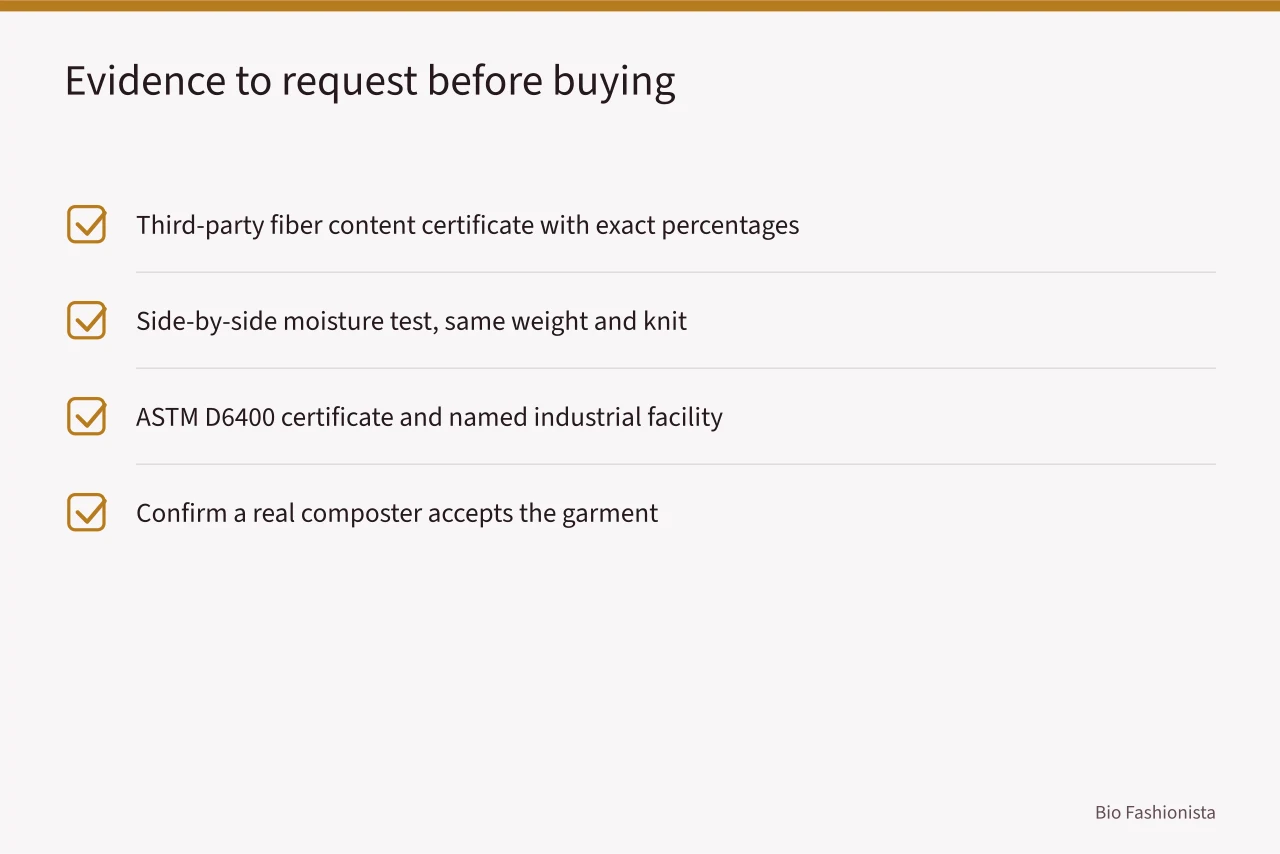
- Biodegradable workout clothes almost always need industrial composting, not a backyard pile. Look for ASTM D6400 and a named facility.
- Care labels matter: many bio-based blends shrink or lose stretch faster when dried hot. Follow the U.S. care label symbols.
Not all bio-based activewear solves the same problem
A bio-based legging can mean three different jobs: a lower-carbon fiber, a compostable end-of-life option, or a plastic-free stretch alternative. These scopes do not overlap. A fabric can be 30% castor-oil polyamide and still contain 70% elastane for stretch. Bio-based is a material claim, not a performance claim. The U.S. market treats activewear as a performance category first, so a hangtag that says "plant-based" still has to meet moisture and stretch expectations. That means the same loom and knit matter as much as the fiber origin. Patagonia, lululemon, and Allbirds each market bio-based or recycled blends for leggings and tops. None of them sell a 100% plant-fiber performance tight that holds up to repeated stretch. A buyer who expects a pure compostable legging will be disappointed. If you are weighing different material paths, Comparing the main routes separates cost, fit, and follow-through claims more clearly than brand pages do.
Questions to ask a supplier or brand
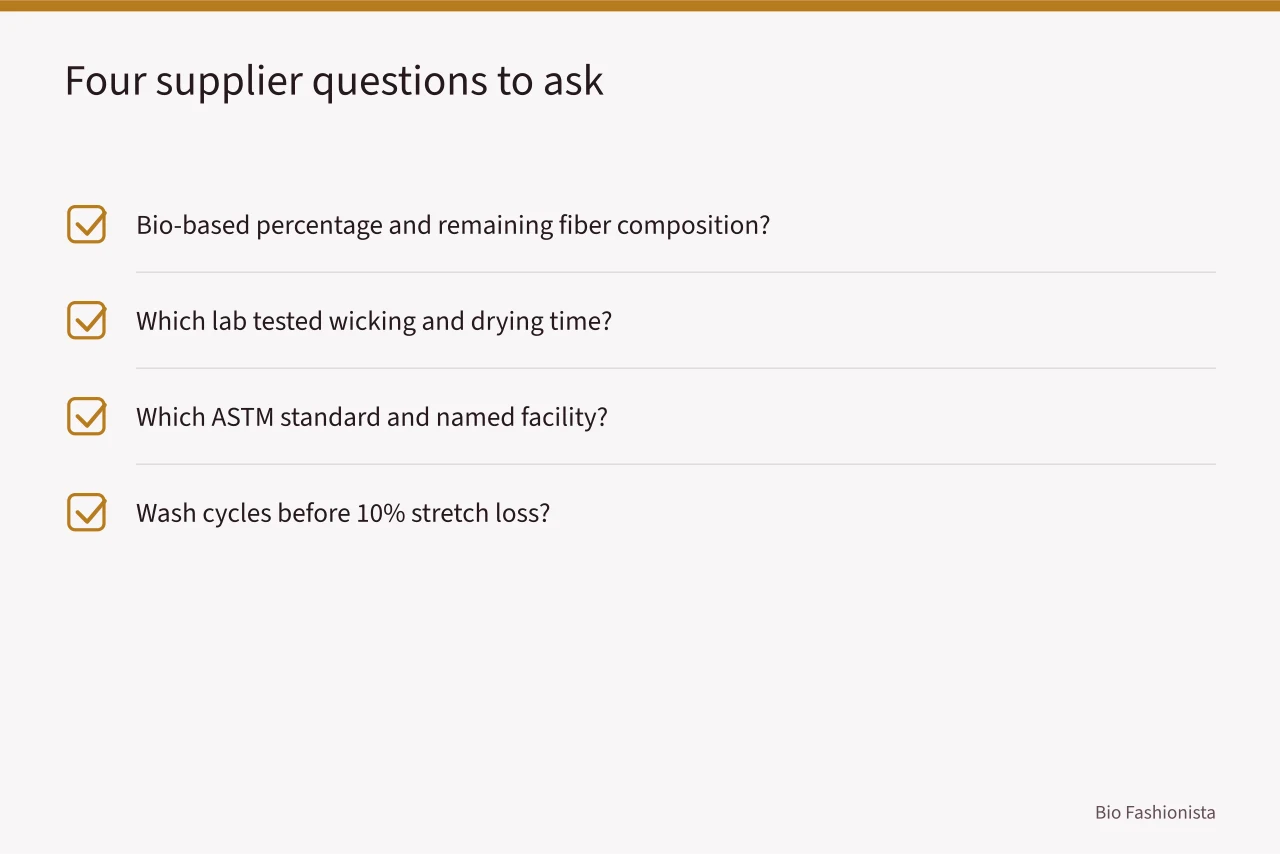
Ask these exact questions by email or live chat. Quote them.
Evidence to request before buying
Do not accept a marketing PDF. Ask for a fiber content certificate from a third party, such as an OEKO-TEX certificate that lists exact fiber percentages. For moisture management, ask for a side-by-side test using the same fabric weight and knit. The moisture management literature separates wicking, absorption, and drying time; a single word "moisture wicking" gives you none of these.
Answers that should end the conversation
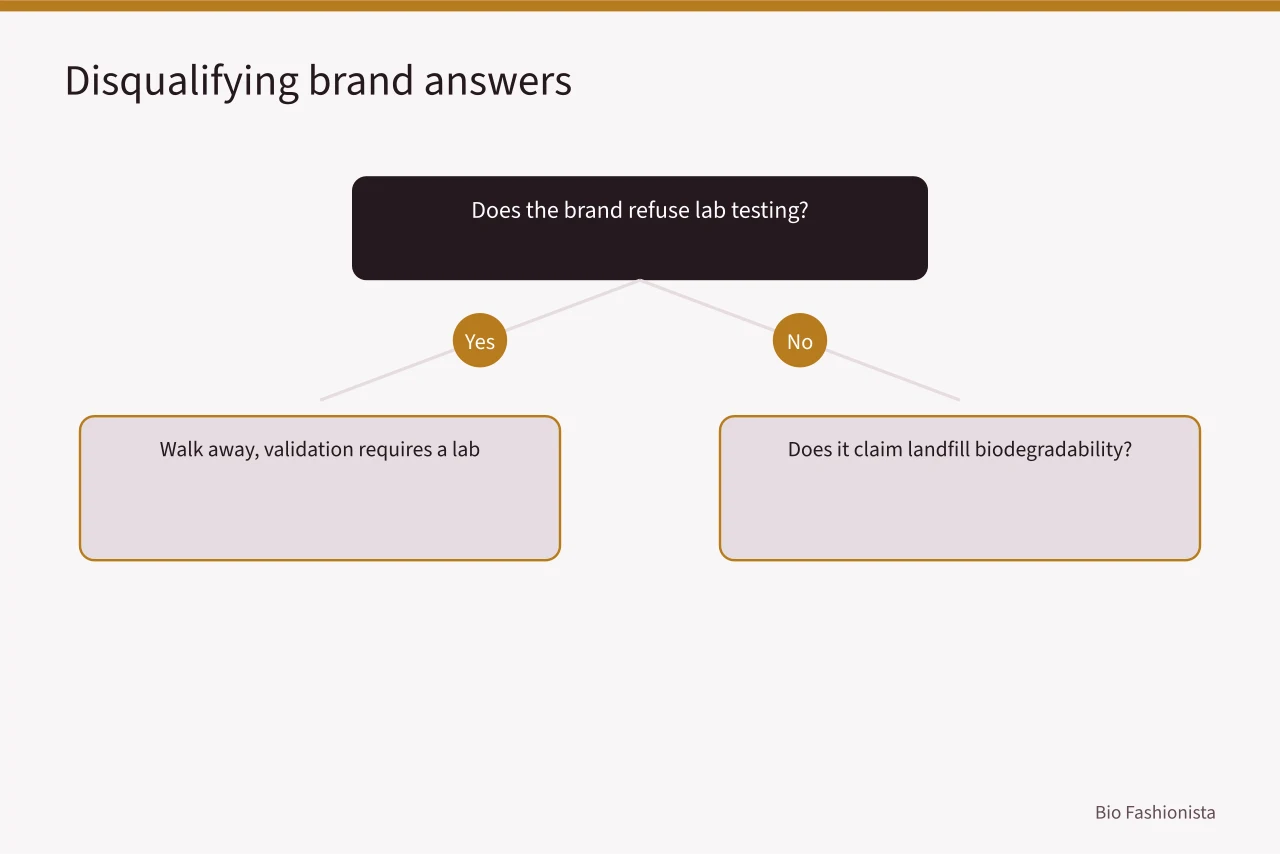
Some brand answers are disqualifying. Walk away if you hear any of these three:
A quick comparison for U.S. buyers
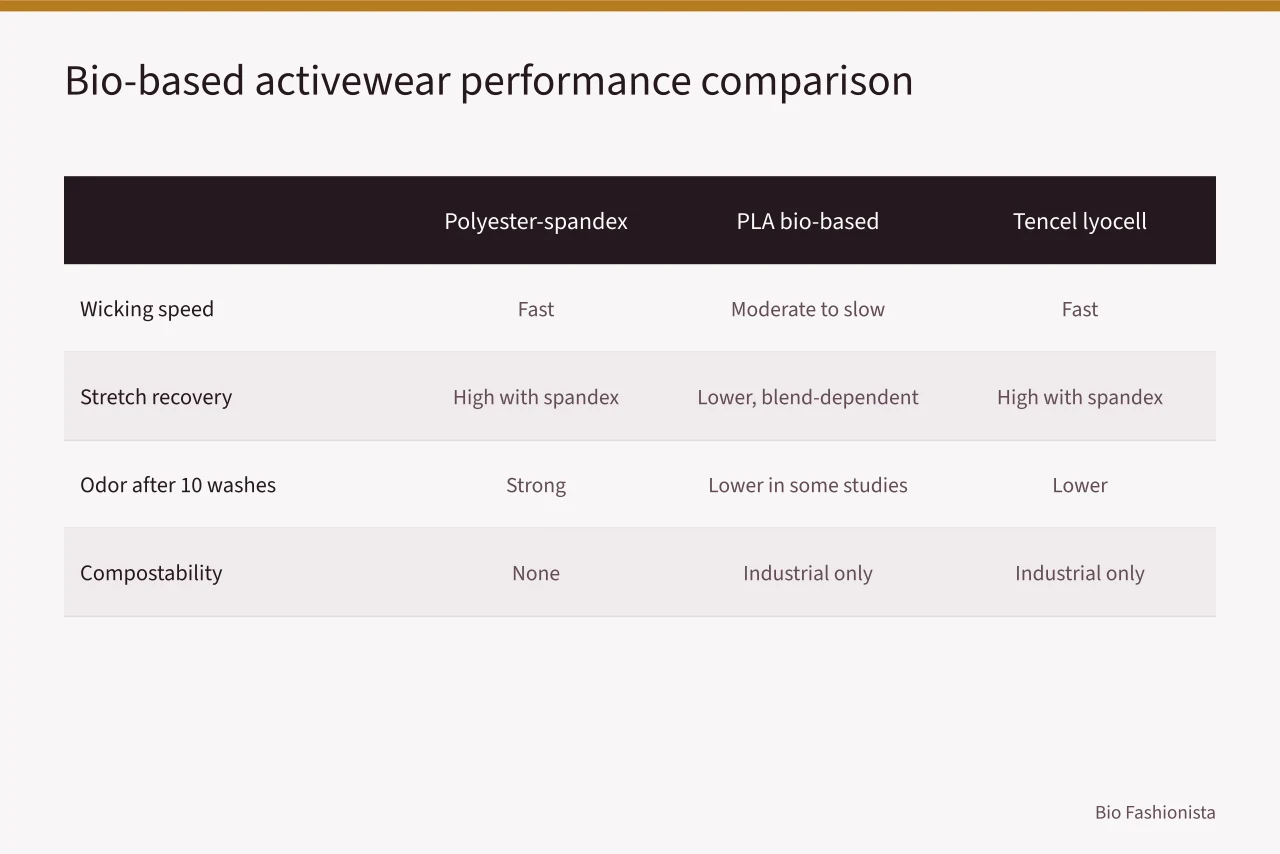
| Test | Polyester-spandex baseline | PLA bio-based blend | Tencel lyocell blend |
|---|---|---|---|
| Wicking speed | Fast | Moderate to slow | Fast |
| Stretch recovery | High with spandex | Lower, depends on blend | High with spandex |
| Odor after 10 washes | Strong | Lower in some studies | Lower |
| Compostability | None | Industrial only | Industrial only |
Bio-based synthetics can still shed microplastics. A PLA fiber is polyester-like and can fragment. Read Do Bio-Based Synthetics Shed Microplastics for what lab tests show. This is important for U.S. buyers who equate bio-based with zero-shed.
What the agreement must say
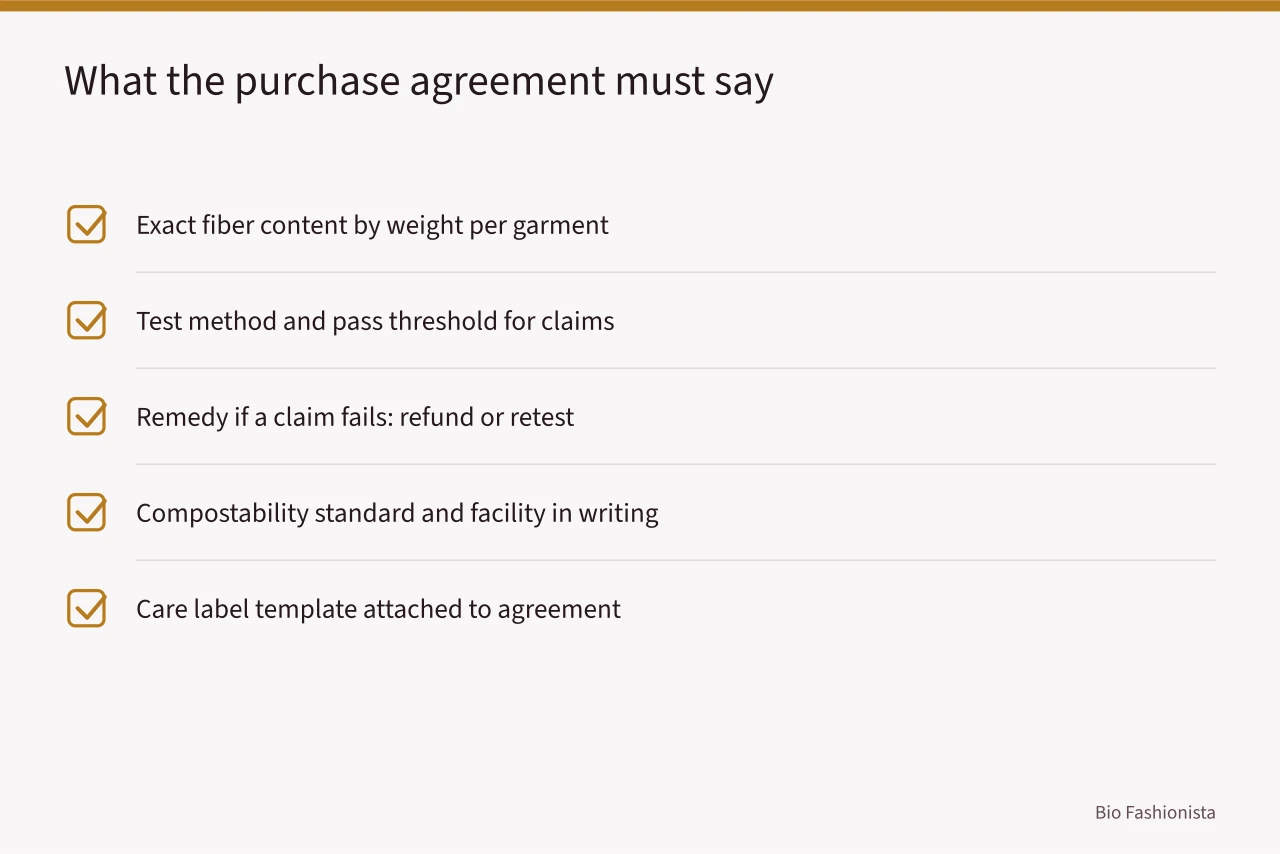
If you are buying for a store, team, or bulk order, the purchase agreement must state three things. First, the exact fiber content by weight per garment, not per batch. Second, the test method and pass threshold for any moisture, odor, or compost claim. Third, the remedy if a claim fails: refund, replacement, or lab retest at the supplier's cost. If the supplier will not put a compostability standard and facility name in writing, do not sign.
Common questions
Does PLA activewear actually wick sweat? PLA alone wicks slower than polyester and often feels clammy. Blends with Tencel or surface treatments improve it, but the claim needs a lab comparison.
Can I compost bio-based leggings at home? Almost never. Most bio-based activewear needs industrial composting certified to ASTM D6400, and even then the elastane must be cut out.
Do bio-based fabrics smell less than polyester? Some plant fibers hold less odor in short lab tests, but U.S. odor claim regulations are weak. Wash after each wear is still the reliable option.
What should I check on the care label? Cold wash, low heat dry, and no fabric softener are common for bio-based blends. Heat degrades both PLA and elastane faster.