Guides
Biosynthetic and biofabricated materials, reviewed without the sales pitch
Biosynthetic and biofabricated materials explained: compare fermentation, mycelium, microbial cellulose, engineered proteins, finishing, performance, and disposal.
What to take away
- Biosynthetic and biofabricated are process descriptions, not complete environmental ratings.
- Microorganisms may make a polymer, bind a substrate, grow a sheet, or produce a chemical building block.
- A grown base material can still contain coatings, backings, binders, dyes, or fossil-derived components.
- Product claims need evidence for identity, biological content, performance, safety, care, and end route.
- Pilot material, commercial material, and finished consumer product are different stages of proof.
Biosynthetic and biofabricated materials use biological systems as part of material production. Depending on the process, bacteria may secrete cellulose, fungi may grow a mycelial network through a feedstock, yeast or other microbes may produce proteins or chemical precursors, and cultured cells may form biological material.
These routes are often grouped together because they involve biotechnology. Their inputs, outputs, scale, performance, and disposal behavior can be very different. A microbial polymer is not the same thing as a mycelium-bound composite. A fermentation-derived monomer can become a conventional synthetic polymer. A grown sheet can receive enough finishing to change how it behaves after use.
Working definitions
Biosynthetic material
A biosynthetic material is made through a biological production step, often using cells, enzymes, or fermentation to create a polymer, protein, pigment, monomer, or other useful substance. The resulting material may be identical to a substance made by another route or may have a distinct structure.
Biofabricated material
Biofabrication uses living systems or biologically produced matter to build or shape material. The process may grow a sheet, deposit cellulose around a scaffold, bind particles with mycelium, or form a three-dimensional structure.
Bio-based material
Bio-based refers to biological feedstock. It does not say whether living organisms built the material. A mechanically processed flax fiber is bio-based but not normally called biofabricated. The broader bio-based fiber guide covers that wider feedstock family, from cotton to cellulosics.
These categories can overlap. State the actual process instead of relying on one broad label.
Main material routes
Named examples include MycoWorks Reishi and Ecovative mycelium composites, Spiber Brewed Protein, and Modern Synthesis bacterial cellulose. Bolt Threads developed Mylo, a mycelium material used in pilot products.
| Route | Biological role | Output before finishing | Questions to ask |
|---|---|---|---|
| Microbial cellulose | Bacteria secrete cellulose | Wet pellicle, film, pulp, or formed structure | Culture medium, yield, drying, plasticizer, coating |
| Mycelium composite | Fungal network grows through or on feedstock | Bound composite, foam-like form, or sheet | Species, substrate, growth, deactivation, binder, finish |
| Fermentation-derived protein | Engineered or selected microbes produce protein | Purified protein for fiber or film formation | Organism, feedstock, purification, spinning, additives |
| Fermentation-derived chemical | Biology produces a monomer or precursor | Chemical input for polymer production | Bio-based share, polymer identity, process energy, end behavior |
| Cultured-cell material | Cells grow biological tissue or matrix | Sheet or structured biological material | Cell source, medium, scaffold, maturation, finish |
| Enzyme-enabled process | Enzyme catalyzes a production or finishing step | Modified fiber, dye, finish, or recovered input | Enzyme source, auxiliaries, conditions, wastewater, durability |
Microbial cellulose
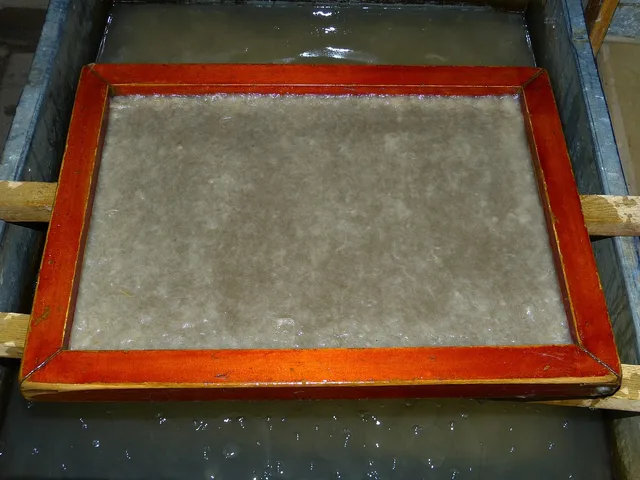
Certain bacteria produce cellulose outside the cell, forming a network that can collect as a wet pellicle at the air-liquid interface. Producers can dry, plasticize, dye, laminate, coat, or combine this cellulose with a textile scaffold.
The material may offer fine fiber structure and the ability to grow in a form, but untreated dried sheets can have limitations involving flexibility, water response, thickness, production time, and consistent scale. The finished product must be tested after every added treatment.
A peer-reviewed review of bioinspiration in fashion discusses bacterial cellulose films, mycelium-grown structures, and other biologically inspired textile routes. It treats performance and production constraints alongside the novelty, which is the correct balance for product assessment.
Mycelium materials
Mycelium consists of fungal hyphae. In material production, it can grow through agricultural or lignocellulosic particles and bind them, or it can be cultivated toward sheet-like forms. Heat, drying, compression, tanning-like processes, binders, coatings, and backing fabrics may follow.
The word mushroom is often used in consumer copy, but the material may be made from mycelium rather than a mushroom fruiting body. Ask for the fungal component, substrate, and complete finishing recipe.
Performance can depend on species, strain, feedstock particle size, moisture, growth time, temperature, density, pressing, and finish. That makes a brand name or organism name a weak predictor of the final product.
Fermentation-derived proteins and polymers
Microbes can be used to produce proteins or chemical building blocks. The producer then purifies and converts the output into fiber, film, resin, or coating.
Important distinctions include:
- whether the final polymer is new or chemically equivalent to an established polymer
- which fraction comes from biological feedstock
- whether genetically engineered organisms are used and contained in production
- how the product is purified
- which solvents, crosslinkers, plasticizers, and finishes are added
- whether the biological production step changes disposal behavior
In US marketing, the FTC's guidance on degradable claims requires evidence that the entire item completely breaks down within a reasonably short time after customary disposal. It treats unqualified claims for landfill-bound goods as deceptive.
Cultivated biological sheets
Cell culture can produce sheets or tissue-like matrices. A commercial material may also include a scaffold and extensive post-processing. The result should be described by composition and production stage, not simply by analogy to leather.
If a product is marketed as an alternative to an animal material, compare the functions required: tear, flex, abrasion, water, color, edge finishing, stitching, repair, aging, and cleaning. Visual resemblance is only one criterion.
Read the full formulation
The biologically produced portion may be the base, binder, surface layer, or one chemical input. Request a bill of materials for:
- biological output
- residual substrate
- scaffold or backing
- binder
- plasticizer
- coating
- dye or pigment
- crosslinker
- adhesive
- finish and protective layer
A claim such as "made with mycelium" does not state how much of the product is mycelium or what provides most of its strength. The guide on how to evaluate a biofabricated material puts this bill-of-materials request first.
Scale and readiness
Separate five levels:
Five Readiness Levels
- Laboratory sample
- Repeatable pilot material
- Qualified material at relevant scale
- Finished product tested for use
- Commercial supply with consistent quality
- Lab sample
- Pilot batch
- Pre-commercial
- Commercial material
- Finished product
A typical move from lab sample to commercial supply takes two to five years, and pilot batches often run in the tens to low hundreds of kilograms. Static bacterial cellulose cultures commonly yield single-digit grams per liter.
Evidence at one level cannot answer every later question. A lab sheet may show feasibility without proving production yield, stable color, garment care, or supply volume.
Ask for current capacity, batch variation, lead time, minimum order, quality controls, and what happens when a lot fails. The biofabricated methods compared by use case weigh these routes against concrete product briefs.
Environmental questions
Map the actual process. Include culture or growth medium, agricultural or sugar feedstock, water, energy, sterilization, temperature control, aeration, purification, drying, finishing, waste, and transport.
Waste-fed claims need a defined input and allocation method. A residue may require collection, drying, transport, and pretreatment. A biological process may reduce one input while using energy for controlled conditions or drying.
Compare the finished product with a functionally equivalent product over a stated boundary. Avoid declaring a route lower impact from feedstock alone. These comparisons belong inside the same whole-garment sustainability assessment used for conventional materials.
Performance and care
Test for the intended product:
- tensile and tear behavior
- flexing and crease recovery
- abrasion and surface loss
- wet strength and water spotting
- dimensional stability
- colorfastness
- temperature and humidity response
- seam, adhesive, and edge performance
- cleaning compatibility
- aging after repeated use
If a coating makes the material usable, test it as part of the material rather than treating it as an irrelevant add-on.
End-of-use claims
Biological origin does not establish home compostability, industrial compostability, marine degradation, or recyclability. A composite can contain incompatible layers. A biodegradable base may carry a durable coating.
Require the test sample, standard, conditions, time, residues, and scope. Then confirm whether an actual collector or facility accepts the finished item.
Common questions
Is biofabricated the same as lab-grown?
Not always. Biofabrication can use controlled growth or biological assembly at different scales. State the organism, process, and output rather than relying on a casual label.
Are mycelium materials made from mushrooms?
They are commonly made with mycelium, the network of fungal hyphae, rather than the mushroom fruiting body. The substrate and finishing components also matter.
Is microbial cellulose the same as cotton?
Both are cellulose, but they are produced and structured differently. Product performance depends on processing, formulation, thickness, scaffold, and finish.
Do these materials contain living organisms when sold?
Some experimental living materials may, but many commercial concepts deactivate or remove living cells. Ask the producer for the state of the finished product.
What should a buyer request first?
Request complete composition, production stage, intended use, product-level tests, and conditions behind any bio-based, biodegradable, or compostable claim.
In this guide
- How to biosynthetic and biofabricated materials: review stepsHow to biosynthetic and biofabricated materials: a practical review of composition, testing, safety, claims, and end-of-life routes before adoption.
- Biofabricated materials compared by what each one is grown forBiofabricated materials compared: weigh microbial cellulose, mycelium, fermentation proteins, biosynthetic polymers, and cultured sheets by product use.
- Biosynthetic and biofabricated materials checklist: processA biofabricated materials checklist for the process side: the biological route, scale and yield, batch sampling and change control before any pilot approval.
- Which habits around biofabricated materials are worth keeping?Biofabricated material problems diagnosed: trace cracking, swelling, delamination, batch variation, contamination, odor, weak claims, and disposal conflicts.
- Biosynthetic and biofabricated materials example: a templateFictional template: this biosynthetic and biofabricated materials example reviews a microbial-cellulose bag panel's pilot testing, claims, and disposal limits.