Reviews
PFC-Free Waterproof Coatings on Bio-Based Jackets: Do They Work?
PFC-free waterproof coatings bio-based jackets need a number, not a claim. Use the AATCC 22 spray rating after five washes, and know what it misses.
What to take away
- A PFC-free waterproof coating on a bio-based jacket can handle light to moderate rain when new, but it will lose repellency faster than a fluorinated finish.
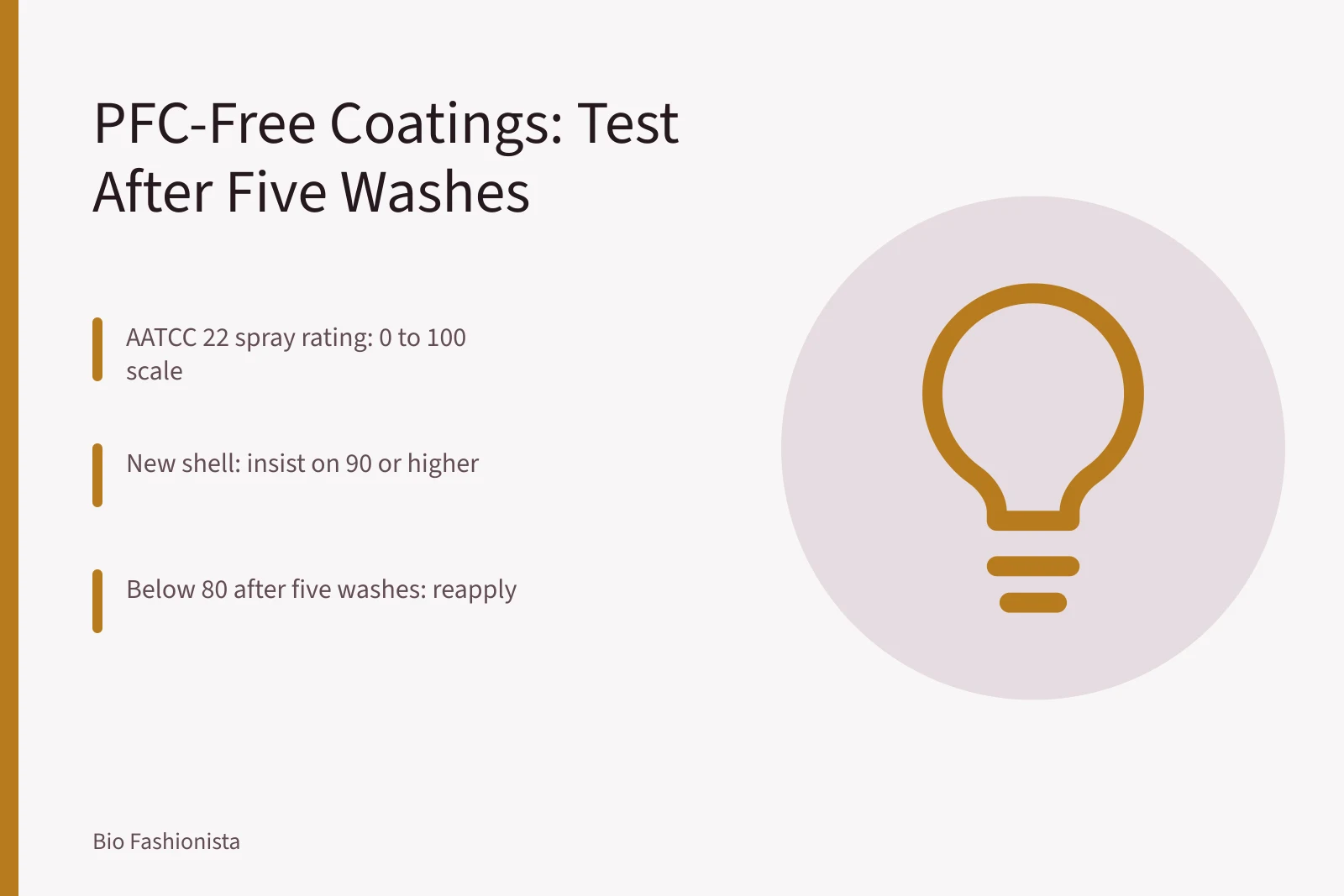
- The metric to track is the AATCC 22 spray rating, measured before and after five launderings.
- A rating below 80 after five washes is the threshold to reapply the finish or stop relying on that jacket for rain.
- This rating cannot measure breathability, seam tape failure, or how much microplastic the shell sheds.
U.S. outdoor brands have moved many rain shells away from long-chain per- and polyfluoroalkyl substances. The U.S. EPA reports that these compounds persist and can accumulate in people and the environment. California Proposition 65 warnings have also pushed buyers toward jackets labeled with a bio-based water repellent finish. For a bio-based jacket to meet U.S. rainwear expectations, you need a repeatable number, not a marketing claim.
What to measure
The AATCC 22 spray test is the standard measure. A fixed volume of water sprays on the fabric at a set angle. The surface is rated from 0 to 100. A rating of 100 means no sticking or wetting. A rating of 90 means slight random sticking. A rating of 80 means wetting at spray points. For a new rain shell, insist on a rating of 90 or higher.
Measure the same jacket after five home launderings using the care label. The decline matters more than the new rating. Dirt, body oil, and abrasion remove a bio-based finish faster than a fluorinated one. A fluorinated DWR once held ratings above 90 for many washes, but those finishes rely on the same PFAS chemistry. The bio-based shell may be made from recycled polyester or bio-based polyester. Recycled Polyester vs Bio-Based Polyester explains the substrate differences.
How to read it
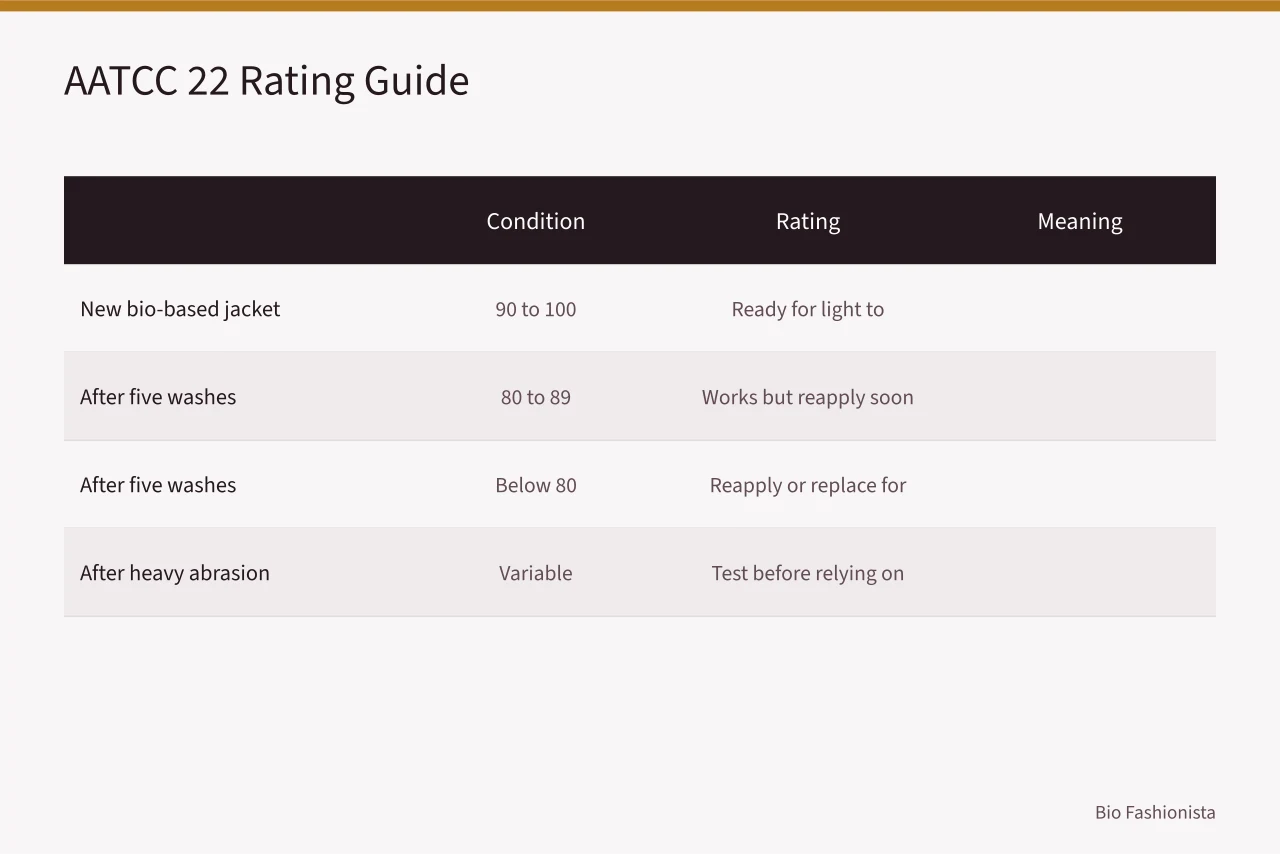
| Condition | AATCC 22 rating | What it means |
|---|---|---|
| New bio-based jacket | 90 to 100 | Ready for light to moderate rain |
| After five washes | 80 to 89 | Works but reapply soon |
| After five washes | Below 80 | Reapply or replace for rain use |
| After heavy abrasion | Variable | Test before relying on it |
The table is a guide, not a warranty. A rating of 80 means the fabric wets at spray points. That is enough to feel cold or clammy in sustained rain. U.S. buyers often expect a rain shell to bead water for a full season. A bio-based DWR will need more frequent reapplication to meet that expectation.
A rinse cycle alone will not restore a bio-based DWR. The rating drops because the finish has worn away or become coated with oils, not because the jacket is dirty.
What it cannot tell you
The AATCC 22 spray rating does not measure water pressure through the fabric. A jacket can bead water on the surface and still leak at the seams. It also does not measure breathability. A stiff, waxy bio-based coating can score high on spray rating while trapping sweat. For a fuller picture, look for the hydrostatic head rating in millimeters and a breathability test such as ASTM E96, but those are separate metrics.
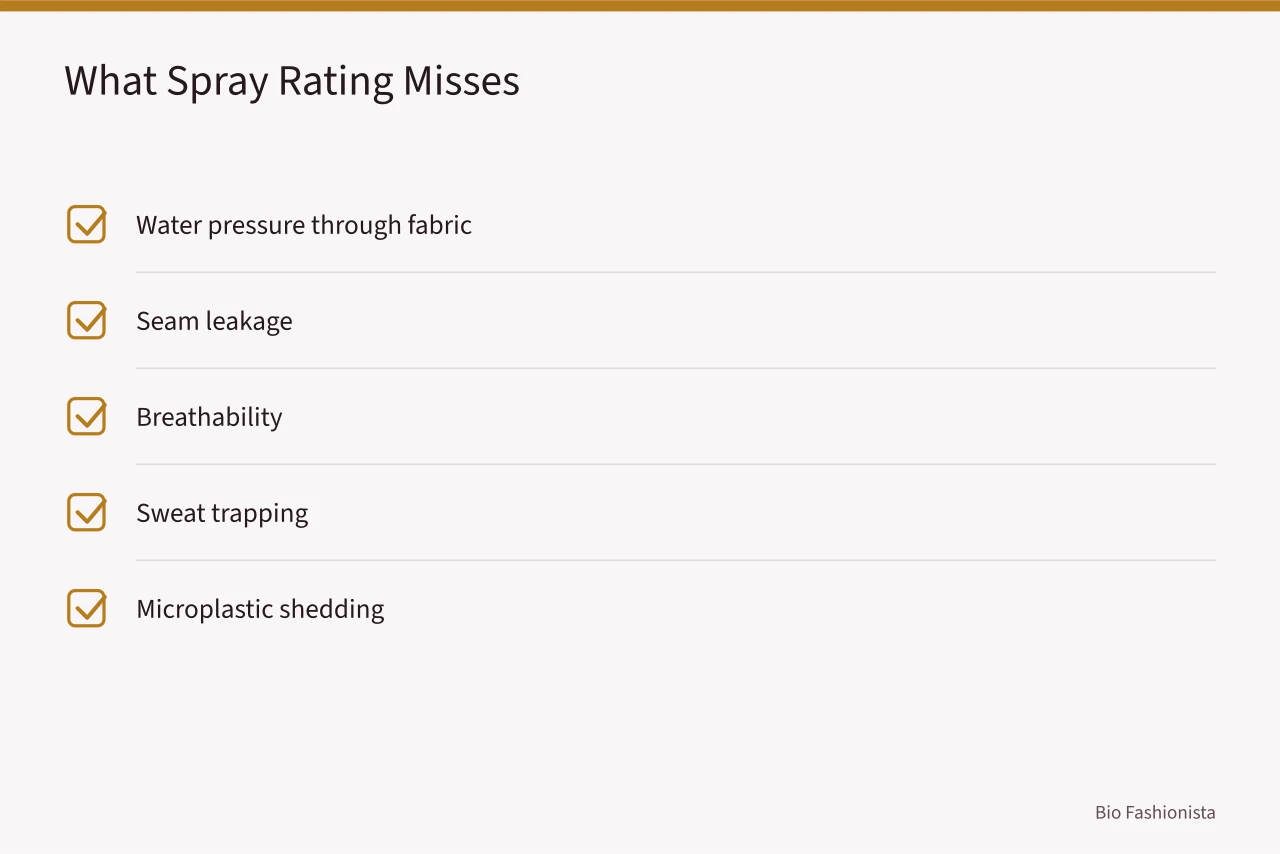
A separate article asks whether Bio-Based Synthetics Shed Microplastics, and the spray rating cannot answer that either.
Attribution and its limits
A drop in spray rating can come from several causes. Abrasion from pack straps scrapes the finish. Body oils from the neck and cuffs contaminate the surface. Detergent residue can mask the finish. The AATCC 22 test cannot separate these causes. It only records the outcome.
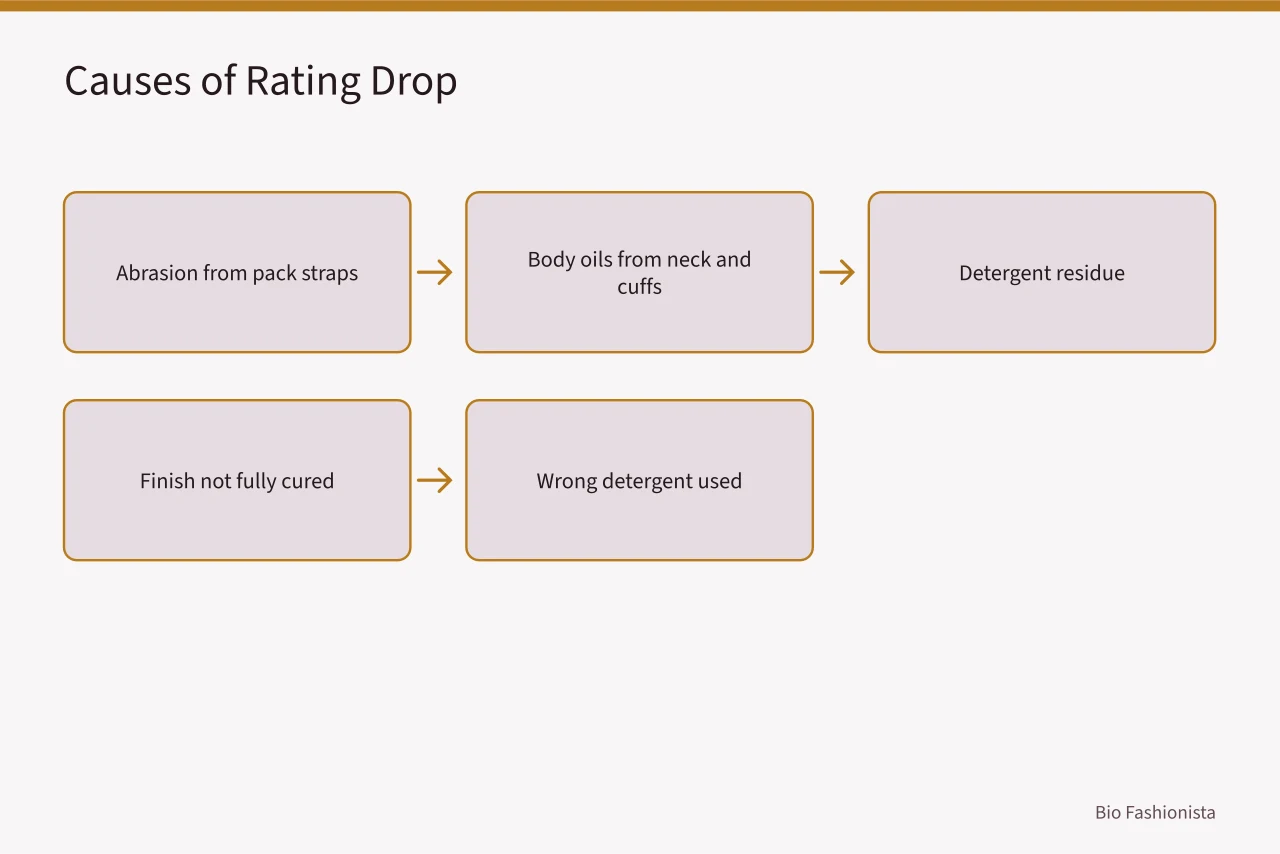
A poor rating may reflect hard use, the wrong detergent, or a finish that was never fully cured. Check the care label. Most bio-based DWRs require a cleaner without fabric softener. If the jacket has not been washed clean before testing, the number will mislead you.
A lab test will control for detergent and abrasion, but a home user rarely does. That gap is why the number should guide action, not assign blame. The spray rating also loses meaning if the jacket has been worn against a backpack for a full season.
For guidance on how finishes interact with the rest of the garment, see the article on textile dyes and finishes. That piece explains why some bio-based finishes fail after contact with certain dyes and washes.
When to stop measuring and decide
If the AATCC 22 rating falls below 80 after five washes, stop tracking and act. Reapply a bio-based DWR according to the product instructions. If the jacket still wets out after reapplication, it is time to use a different shell for rain. Three consecutive measurements below 80 tell you the finish is not recovering.
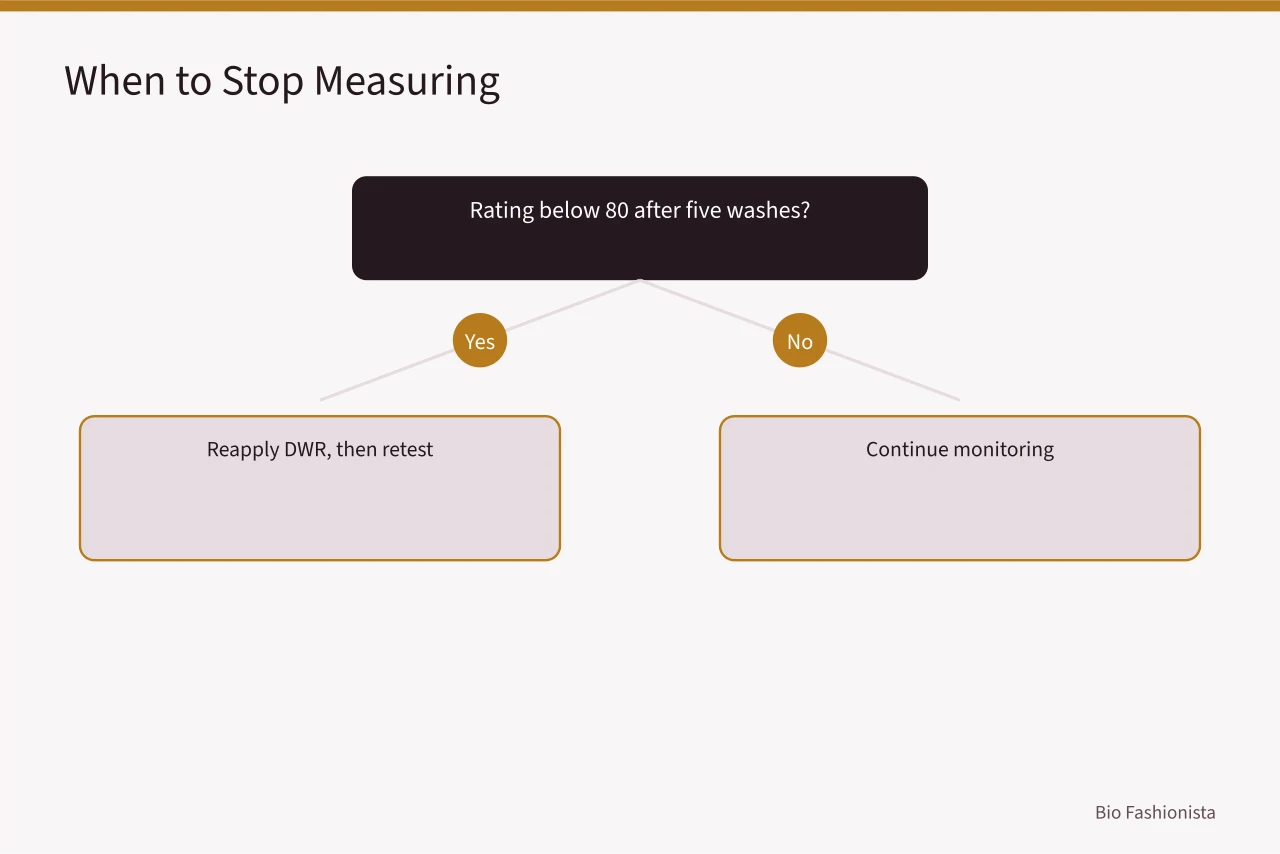
Do not keep measuring week after week hoping the number improves. A bio-based water repellent finish does not self-heal. Once surface wetting becomes visible on the shoulders and chest, the useful rain protection has already declined.
A single low rating after a muddy hike is not a reason to abandon the jacket. Wash it, reapply the DWR, and test once more. The threshold is for a clean, laundered jacket, not one straight off the trail.
Before trusting a bio-based content claim, check the USDA BioPreferred Label for clothing to see what is verified. The label covers the fiber and material content, not the waterproof coating. That distinction matters for a rain shell.
Common questions
Does a PFC-free bio-based jacket keep me dry in a downpour? For 30 to 60 minutes in moderate rain, a new jacket with an AATCC 22 rating of 90 or higher should bead water. Once the finish wets out, breathability drops and you may feel clammy even if the membrane holds.
How often should I reapply a bio-based DWR? After every five to ten washes or whenever the spray rating drops below 80. Dirt and abrasion remove the finish faster than laundering alone.
Is a higher AATCC 22 rating always better? Not always. A very high rating can come from a thicker coating that stiffens the fabric and reduces breathability. Check hand feel and breathability alongside the number.
Do bio-based jackets shed fewer microplastics? Not necessarily. The bio-based shell may still be a synthetic polymer. See the article on microplastic shedding for what tests show.