Rules
Part of Clothing labels and certifications: how to read them
Troubleshooting clothing labels and certifications problems
Troubleshooting clothing labels and certifications problems: check fiber, origin, care, marks, certificate scope, QR codes, and mislabeled garments.
What to take away
- Preserve the physical label and sales page before asking anyone to change them.
- Diagnose mandatory disclosure, care, and voluntary claim failures separately.
- A valid company certificate may still be irrelevant to the pictured garment.
- Conflicting care or origin information requires a hold, not a best guess.
- Correct every channel and keep a record of affected lots and sale dates.
Clothing labels and certifications problems can be physical, factual, legal, or interpretive. A tag may detach, percentages may be wrong, a certificate may be expired, or an accurate narrow claim may be designed to imply much more. Begin by recording the exact symptom. The layer-by-layer reading that diagnosis relies on comes from the labels and certifications primer.
Diagnostic order
- Quarantine affected stock or preserve the purchased item.
- Capture labels, hangtags, packaging, web copy, and marketplace listings.
- Identify style, lot, supplier, factory, country, and sale date.
- Separate each statement by regulatory or voluntary role.
- Compare it with approved artwork, product records, tests, and registries.
- Define affected products and channels.
- Correct the source data before printing replacement labels.
Percentages do not add up
Possible causes: arithmetic error, changed fabric, copied artwork, component confusion, rounding, an unrecorded blend, or the wrong weight basis.
Percentage Mismatch Checks
- Bill of materials
- Purchase orders
- Supplier documents
- Test specimens
- Component treatment
- Applicable tolerance
Check: bill of materials, purchase orders, supplier documents, test specimens, component treatment, and applicable tolerance. Do not simply edit one percentage to make the total equal 100.
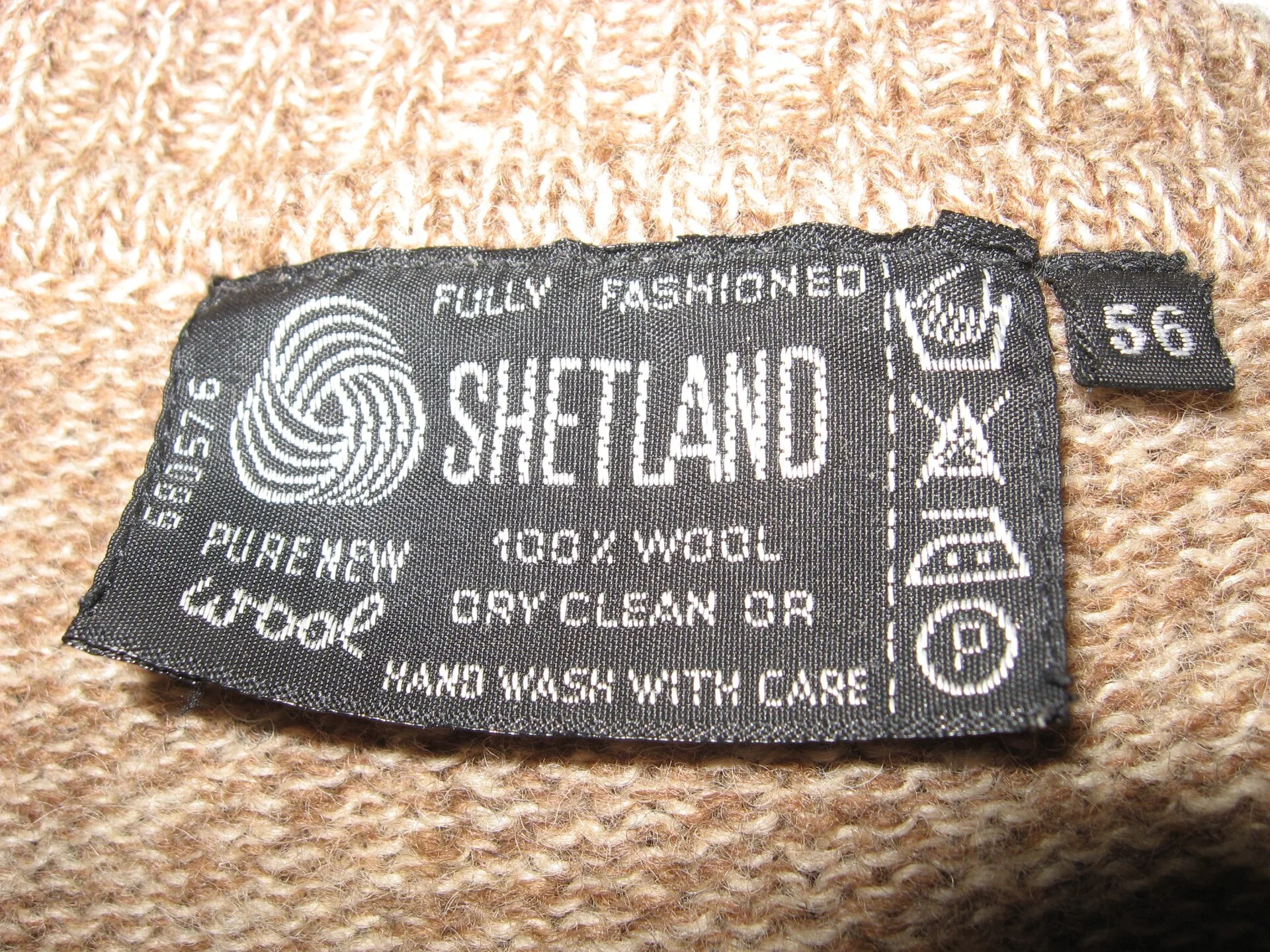
The FTC's Textile Fiber Rule summary states that covered US textiles disclose generic fiber names and percentages by weight, responsible manufacturer or marketer, and country of processing or manufacture. The rule implements the Textile Fiber Products Identification Act; wool products may also be subject to the Wool Products Labeling Act. Use the rule text and qualified review for the product. The summary does not settle every exemption or component question.
Fiber name conflicts with advertising
Symptom: the sewn label says rayon or viscose while the product page says bamboo, or a trade name replaces a generic fiber name.
Check: whether the term describes the source plant, manufacturing feedstock, legal generic fiber, trademark, or marketing story. Test or trace the actual fiber and correct all channels. Do not preserve a more appealing but inaccurate name. For textile products made from regenerated bamboo cellulose, the FTC's fiber-name guidance generally calls for a generic name such as rayon or rayon made from bamboo, rather than calling the fiber simply bamboo. When the disputed name involves a bio-based feedstock claim, the bio-based fiber diagnostics pick up the trail.
Country statements disagree
Symptom: neck label, hangtag, packaging, and website name different countries.
Possible causes: mixed production stages, old artwork, seller-added copy, changed factory, or confusion between design, fabric, and garment manufacture.
Check: manufacturing sequence, customs and import records, invoices, labels by lot, and the legal origin rule. For imported textile and apparel products, consult U.S. Customs and Border Protection (CBP) and the textile origin rules in 19 CFR § 102.21, along with the country-of-origin marking requirement in the Tariff Act of 1930. For a “Made in USA” advertising claim, also check the FTC's Made in USA Labeling Rule. Stop sale or claim use until the responsible team resolves the applicable wording.
Care text and symbols conflict
Symptom: written text permits washing while a symbol prohibits it, or the tag states both machine wash and dry clean only.
Care Text vs Symbol Conflict
Do written care text and symbol agree?
Follow approved care report
Contact maker before cleaning
Check: approved care report, artwork revision, translation, symbol master, and bulk label. The FTC Care Labeling Rule (16 CFR Part 423) governs care instructions for covered apparel and certain piece goods. For care symbols, check the symbol meanings against ASTM D5489 or ISO 3758 and the applicable market requirements. A buyer should contact the maker before cleaning. A seller should not tell customers to choose whichever route seems gentler.
Correction: determine the supported complete route, correct inventory and digital instructions, assess sold units, and document customer remedy where damage risk exists.
Label detaches, fades, or becomes unreadable
Possible causes: unsuitable label stock, ink, weave, attachment, edge finish, heat, chemistry, abrasion, or wrong care exposure.
Check: label and attachment after every supported care route. A detachable hangtag is not a substitute where information must remain with the item.
Certification number returns no result
Possible causes: transcription error, wrong registry, delayed update, private lookup, expired or suspended certificate, company certificate without product listing, or fabricated number.
Certification Number No Result
- Scheme owner
- Exact number format
- Legal entity
- Certification body
- Dates
- Sites
- Standard version
Check: scheme owner, exact number format, legal entity, certification body, dates, sites, standard version, product category, and transaction evidence. Contact the scheme or certifier through independently found details, not only the contact printed on the questionable tag.
Named schemes and verification routes
Certification routes cover different claims; none of these marks automatically proves that a garment is sustainable in every respect.
- GOTS (Global Organic Textile Standard):covers certified organic fibers and criteria for textile processing. Check the GOTS public Certified Suppliers database, certificate scope, product details, and label approval.
- OEKO-TEX STANDARD 100:tests textiles and their components for harmful substances; it is not a general sustainability certification. Check the OEKO-TEX Label Check for the article and certificate status.
- bluesign:distinguishes system-partner status from approval of specific materials or products. Check the bluesign FINDER and match the result to the product claim.
- Cradle to Cradle Certified:a product certification with version- and scope-specific requirements. Check the Cradle to Cradle Certified Product Registry.
- B Corp:certifies a company, not an individual garment. Check the B Lab directory and do not present company status as product certification.
- USDA BioPreferred Certified Biobased Product:addresses a product's biobased content, not its overall environmental performance. Check the USDA BioPreferred product catalog.
- FSC:relevant to claims about forest-derived materials and chain of custody, not a general apparel certification. Check the FSC certificate database and the scope of the claim.
- RDS (Responsible Down Standard) and RWS (Responsible Wool Standard):apply to down and wool supply-chain claims, respectively. Check the certificate and scope through Textile Exchange resources and the certification body.
Examples of certification bodies include Ecocert and Control Union for textile standards, and Hohenstein and TESTEX as OEKO-TEX institutes. Confirm that the body is currently authorized for the specific scheme and scope. For example, a current GOTS database record that matches the holder, site, scope, and garment is a useful positive check; a company record with no relevant product scope does not prove the garment qualifies. An OEKO-TEX Label Check result for a different article or an expired certificate does not verify the garment either. A number that returns no result may reflect an error or private lookup, so it is not by itself proof of fraud.
Logo appears on every product page
Symptom: a site header displays a certification mark even though only selected products qualify.
This can cause buyers to infer site-wide product coverage. The FTC's Green Guides section on certifications and seals of approval treats a seal that does not convey its basis as an implied general environmental benefit claim.
Certification does not remove the marketer's duty to substantiate every claim the seal communicates. Apply each scheme's own current rules; one scheme's requirements do not govern other marks.
Correction: place authorized marks on matching product pages with required grade, certifier, license, and scope details. Separate company certification statements from product claims.
Certificate is valid, product is not listed
Possible causes: certificate covers a facility, processing scope, different category, earlier style, or supplier but not the finished garment.
Check: certificate annex, product list, site scope, transaction documents, chain-of-custody model, and labeling approval. Do not infer product status from a supplier name match. The certification route comparison maps which certificate types cover which subjects.
Vague green seal
Symptom: a leaf, globe, or custom "eco approved" badge has no criteria or issuer.
Check: whether it is self-created, a trademark, an endorsement, or a certification. List every likely implied benefit. Require evidence and clear qualification for each or remove the badge. The broad-claim diagnosis guide works through those implied-benefit questions in detail.
QR code is dead or changes destination
Possible causes: expired domain, changed product system, printing error, redirect, region block, or account requirement.
Check: scan production samples on several devices, record the final URL, product identifier, privacy behavior, accessibility, and archived release page. A QR code cannot rescue missing mandatory physical information where digital substitution is not allowed.
Wrong label sewn into the garment
Symptom: color, fiber, size, care, country, or product code does not match the item.
Finding Status and Action
Finding
- Unsupported care
- Stop
- Expired certificate
- Stop claim
- Registry delay documented
- Review
- Minor layout issue
- Review
- Wrong fiber or origin
- Stop
- Dead optional QR
- Review
Status
- Unsupported care
- Hold sale, assess sold units
- Expired certificate
- Remove mark, contact scheme
- Registry delay documented
- Hold claim until confirmable
- Minor layout issue
- Obtain market-specific decision
- Wrong fiber or origin
- Quarantine affected lots
- Dead optional QR
- Restore link, preserve records
Immediate action
- Unsupported care
- Expired certificate
- Registry delay documented
- Minor layout issue
- Wrong fiber or origin
- Dead optional QR
Check: line clearance, label bundles, work order, barcode controls, changeover records, remaining stock, and neighboring lots. Determine whether the issue is isolated or systemic before relabeling.
| Finding | Status | Immediate action |
|---|---|---|
| Unsupported care | Stop | Hold sale and use, assess sold units |
| Expired certificate with no continuation basis | Stop claim | Remove mark and contact scheme |
| Registry delay documented by issuer | Review | Hold claim until confirmable |
| Minor layout issue with all required text legible | Review | Obtain market-specific decision |
| Wrong fiber or origin artwork | Stop | Quarantine affected lots |
| Dead optional QR with complete physical label | Review | Restore link and preserve records |
Prevention
Use one controlled data source for product facts, separate label approval from graphic design, require scheme authorization, scan bulk labels at the factory, archive web claims, and set certificate-expiry alerts. Complaint codes should distinguish fiber, origin, care, mark, scope, and physical-label failures.
Common questions
Can retailers correct a manufacturer's label?
Only under applicable rules and with accurate, traceable information. Unauthorized substitution can create added responsibility and recordkeeping duties.
Does one failed fiber test prove the whole lot is wrong?
Not automatically. Confirm specimen identity, method, sampling, variation, and lot scope, but do not ignore the result.
Can a certification logo stay online during renewal?
Follow the scheme's continuation rules and obtain written confirmation. Do not assume an application keeps authorization active.
Is a dead QR code evidence of fraud?
No. It is a verification failure that can have routine causes. Investigate the claim through independent official channels.
When should customers be contacted?
Use legal, safety, damage, deception, and remedy assessments for the affected market. Unsupported care or safety information can warrant faster action than a minor optional-link error.