Maintenance
Part of Clothing labels and certifications: how to read them
Pre-release clothing labels and certifications checklist
Pre-release clothing labels and certifications checklist: identity, disclosures, fiber, origin, care, claims, artwork, certification records.
What to take away
- Review the physical garment, online listing, and certificate as one claim system.
- Treat legal scope, false identity, unsupported care, and unauthorized marks as stop issues.
- Require exact evidence for percentages, origin wording, and certification scope.
- Check readability, attachment, placement, language, and digital access before release.
- Reapprove artwork whenever the product, supplier, factory, standard, or market changes.
Use this clothing labels and certifications checklist before approving hangtags, packaging, or online claims. Mark each item Pass, Review, Stop, or Not applicable, and identify the evidence, owner, and date. Market-specific legal advice may be required. The layers reviewed here are explained in the labels and certifications reference.
1. Product identity and scope
- Style, revision, color, size range, and SKU are fixed.
- Target countries, sales channels, and launch date are listed.
- Product category is identified, including textile, wool, fur, children's product, uniform, or protective apparel where relevant.
- Every garment component appears in the bill of materials.
- Bulk production matches the reviewed sample.
- Responsible manufacturer, importer, or marketer is named.
2. Mandatory information map
Create one row for each market.
Mandatory Label Information Map
- Fiber composition
- Country of origin
- Responsible business
- Care
- Safety or warning
- Language
Mandatory information map
| Disclosure | Requirement source | Evidence | Artwork location | Status |
|---|---|---|---|---|
| Fiber composition | ||||
| Country of origin | ||||
| Responsible business | ||||
| Care | US FTC care labeling rule, 16 CFR Part 423; EU and national care rules where applicable | Tested-garment care report and approved care text | Inside side seam label, permanent print | Pass |
| Safety or warning | ||||
| Language |
Name the requirement source for each market row: fiber composition under the Textile Fiber Products Identification Act and the FTC rules in the US or Regulation 1007/2011 in the EU; country of origin under the applicable customs and FTC origin rules; responsible business under the FTC dealer-identity rules or the EU General Product Safety Regulation (GPSR) responsible-person requirement; safety or warning under the Consumer Product Safety Improvement Act (CPSIA), 16 CFR 1610, 16 CFR 1615, 16 CFR 1616, California Proposition 65, or the EU GPSR; and language under Canada's Textile Labelling Act and Quebec's Charter of the French Language or each EU market's national language rule.
- Rule versions and effective dates are recorded.
- Exemptions are supported rather than assumed.
- Required permanent information is not placed only on removable packaging.
- Online disclosures meet distance-selling requirements, including the EU General Product Safety Regulation (GPSR) where applicable.
- California Proposition 65 warning requirements are assessed for products sold into California.
- Each target market's required language is assigned to the correct row.
For the EU, Regulation 1007/2011 states that covered textile composition information must use defined fiber names and be durable, legible, visible, accessible, and securely attached when presented on a label. The regulation allows a 3% tolerance between the stated fiber composition and the tested composition for products intended for the final consumer. The terms "100%," "pure," or "all" may be used only when the product is composed exclusively of the same fiber, subject to the regulation's tolerance for unavoidable impurities. Review the current EU textile fiber regulation and national language requirements for the actual market. That regulation is not a universal care-label or environmental-certification code.
In the United States, the FTC administers textile labeling and care rules. The care labeling rule, 16 CFR Part 423, requires care instructions for covered apparel and sets how they must be given.
Fiber content, country of origin, and dealer identity come from the Textile Fiber Products Identification Act and the FTC rules under it. Wool and fur products have separate labeling rules under the Wool Products Labeling Act and the Fur Products Labeling Act. Children's products add safety and flammability rules under the Consumer Product Safety Improvement Act (CPSIA) and 16 CFR 1610, 1615, and 1616. For products sold into California, assess California Proposition 65 warning requirements. Check the current rule text before you approve artwork.
If Canada is a target market, check the Textile Labelling Act and the Textile Labelling and Advertising Regulations, the bilingual English and French label requirement for consumer textile products, and Quebec's French-language rules under the Charter of the French Language, including Bill 96. Record both in the language row.
3. Fiber names and percentages
- Generic names match the applicable list.
- Percentages use the correct weight basis and order.
- The total and allowed tolerances have been checked.
- Component, lining, ornamentation, elastic, and trim treatment is documented.
- "100%," "pure," or "all" wording meets the applicable conditions.
- Trade names do not replace required generic names.
- Supplier declarations match tests and purchase records.
Review: a lab result and supplier declaration differ within a claimed tolerance. Resolving fiber-side conflicts is the domain of the natural fiber checkpoints.
Fiber Names and Percentages Check
- Generic names match applicable list
- Percentages use correct weight basis
- Total and tolerances checked
- Component and trim treatment documented
- 100% wording meets conditions
- Trade names do not replace generic names
- Supplier declarations match tests
4. Origin and business identity
- Manufacturing and processing steps are mapped by country.
- The legal origin rule is identified separately from marketing preference.
- A flag, place name, or "designed in" phrase does not create a false origin impression.
- Company name or registered identifier matches the responsible entity.
- Registry information is current enough for the intended use.
- Physical label and ecommerce origin claims match.
Origin and Business Identity Check
- Map manufacturing steps by country
- Identify legal origin rule
- Avoid false origin impressions
- Match company name to responsible entity
- Verify registry information is current
- Align physical and ecommerce claims
5. Care instruction
- Washing method, temperature, and cycle are supported.
- Bleaching instruction is supported.
- Drying route and heat are supported.
- Ironing and professional-care conditions are supported.
- Text and symbols agree.
- Complete garments, colors, trims, prints, and bonded parts were assessed.
- Warnings cover damaging treatments consumers may reasonably use.
- The process is practical for the intended owner.
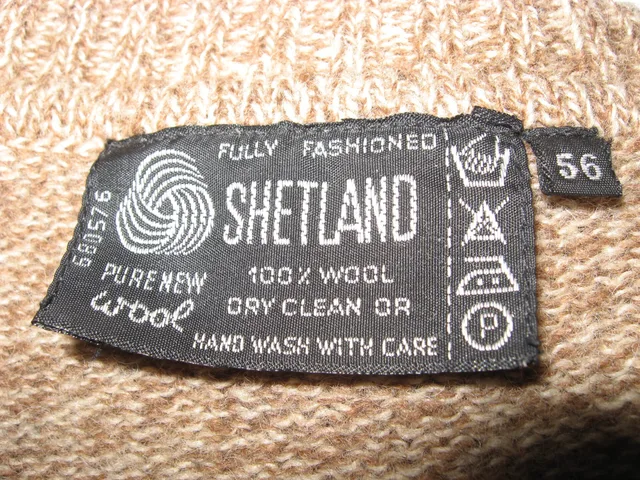
The tested-garment record itself comes from the related durability and care release checklist. Where symbols are used, check them against the applicable symbol standard—ISO 3758 / GINETEX in many markets or ASTM D5489 in the United States—and against the written text, and confirm the printed symbol set matches the approved artwork.
Care Instruction Verification
- Washing method, temperature, cycle supported
- Bleaching instruction supported
- Drying route and heat supported
- Ironing and professional care supported
- Text and symbols agree
- Complete garment assessed
- Warnings cover damaging treatments
- Process practical for owner
6. Voluntary claim inventory
List every word, logo, color cue, image, QR destination, and implied claim.
Voluntary Claim Inventory
- Claim names product or component
- Percentage and basis stated
- Broad words removed or qualified
- Product and packaging claims separated
- Claims not blended
- Comparative claims name baseline
- Visual impression matches evidence
The FTC's consumer environmental seals and marketing claims guidance says seals need sound standards and enough information to understand the evaluated benefit.
Apply the marketer's rule and professional review; the consumer page plainly checks likely interpretation.
- The claim names its product or component subject.
- Percentage and measurement basis are stated where material.
- Broad words such as "green" or "sustainable" are removed or precisely qualified.
- Product and packaging claims are visibly separated.
- Environmental, labor, safety, quality, origin, and animal-welfare claims are not blended.
- Comparative claims name the baseline, period, and method.
- The overall visual impression matches the evidence.
7. Certification control
- Scheme owner and official criteria are identified.
- Standard version and label grade are current.
- Certification body is approved for the relevant scope.
- The scheme's public register or label check is searched to verify the certificate.
- The certification body and its accreditation are checked against the scheme owner's approved list.
- Certificate number, entity, site, category, and dates match.
- Product or transaction evidence connects the garment to the certificate.
- Logo use and wording have the required approval.
- Suspension, expiry, or withdrawal alerts have an owner.
- A certified facility is not presented as a certified finished product.
The named schemes have different limits. GOTS covers organic fiber content and processing from fiber to finished product; it excludes leather and non-textile parts. OEKO-TEX STANDARD 100 tests articles for harmful substances; it does not certify organic content or working conditions.
RDS covers down and feather traceability and animal welfare; it says nothing about the shell fabric. A certificate for one scheme does not extend to another.
Verify certificates in the scheme's own register: the GOTS public database, the OEKO-TEX Label Check, and the Textile Exchange public databases for standards such as GRS and RDS. Certification bodies and accreditation bodies—for example, Control Union, Ecocert, Intertek, IOAS, and ASI—should appear on the scheme owner's approved list for the relevant scope.
Certification Control Check
- Scheme owner and criteria identified
- Standard version and grade current
- Certification body approved for scope
- Certificate details match
- Product evidence connects to certificate
- Logo use approved
- Suspension alerts have owner
- Certified facility not certified product
8. Artwork and physical execution
Artwork and Physical Execution
- Text legible at production size
- Contrast adequate on material
- Required information visible and accessible
- Front-and-back readable without damage
- Label attachment survives care
- Translation reviewed by professional
- Symbols from permitted system
- QR code resolves to product page
Approve artwork only when the printed label can be read at the size it will be produced. Check the production sample, not the digital file alone.
Artwork and physical execution
- Text height (font size)set a minimum type height in the artwork spec and measure it on the printed label. A common working minimum for care text is about 1.5 mm; small labels may need more.
- Readabilitydark text on a light ground, clean strokes, no print bleeding into the seam or fold. Wash and dry the sample, then re-check reading and attachment.
- Attachmentname the method (woven label, printed label, heat transfer, tagless print) and confirm the sewn sample holds through the care cycle.
- Placementstate the position (neck, side seam, waistband, hem) and confirm required information is permanently attached to the garment.
- Languageeach target market gets its required language in the artwork, not added later with a sticker.
- Digital and QR accessscan the code on the production sample, confirm the page matches the approved claim, and confirm it opens on a phone without an app. A QR code does not replace required permanent information.
9. Record package
- Approved artwork and revision history
- Bill of materials and supplier declarations
- Fiber, care, safety, and claim test reports
- Production and country records
- Certificates and transaction documents
- Logo approval and license terms
- Legal or compliance review
- Bulk inspection and retained sample
- Web-page capture at release
- Named owner and retention period
10. Release decision
Release decision
| Status | Rule | Next action |
|---|---|---|
| Pass | All applicable evidence aligns | Release named revision |
| Review | Limited uncertainty has an owner and deadline | Hold affected claim or increase evidence |
| Stop | Legal, identity, care, safety, or mark problem | Do not release |
| Not applicable | Reason and reviewer are recorded | Retain rationale |
Stop conditions that feed this block:
Release decision
- Artwork cannot be tied to a production-equivalent item.
- Labels were substituted without a traceable, authorized record.
- Two care instructions conflict, or the label does not match the tested garment.
- A certification mark was copied from a supplier document without authorization for this product and artwork.
- A required disclosure is missing from a market row.
Do not offset one stop result with several passes. Correct the cause, update the product or artwork, and repeat every affected check. Each affected check follows the ten-step label review.
11. After release
- Monitor complaints about care, composition, origin, and claims.
- Check registry and certificate status on a set schedule.
- Remove marks promptly when authorization ends.
- Preserve label versions by lot and sale date.
- Trigger reapproval after any scoped change.
Common questions
Can a hangtag carry required information?
Sometimes, but permanent placement rules may still apply. Confirm the market and product requirement instead of assuming a removable tag is enough.
Is a supplier certificate sufficient?
Only if its entity, site, product, dates, scope, and transaction trail connect to the garment and the claim is permitted.
What if a claim is true but the logo is unauthorized?
Remove the logo and investigate. Truth of one attribute does not grant trademark or scheme-label rights.
Should old certificates be deleted?
Retain them according to legal and business record policies, clearly marked with their period and status. Do not present them as current.
Who should sign release?
Assign one accountable approver supported by materials, testing, sourcing, compliance, legal, artwork, production, and marketing specialists as needed.