Rules
Canadian Textile Labelling: What the Textile Labelling Act Means for Bio-Based Claims
Textile Labelling Act bio-based claims in Canada must sit beside a fibre content statement that follows federal rules. Here is what a compliant label shows.
What to take away
- The Textile Labelling Act requires most consumer textile articles sold in Canada to carry a label showing fibre content and the dealer's name and address.
- Bio-based wording such as "made from plants" does not replace that fibre content statement. It sits beside it, and the generic fibre name still has to be accurate.
- The Textile Labelling and Advertising Regulations set out the prescribed generic names, the order of listing and the dealer identity rules.
- Environmental claims fall under the Competition Act, enforced by the Competition Bureau, and must be supported by adequate testing before they go on a tag or a product page.
- Keep the test reports and supplier declarations. Without them, a bio-based claim is an assertion, not a substantiated one.
Who has jurisdiction over a Canadian textile label
Two federal statutes cover this ground, and they do different jobs.
The Textile Labelling Act and its regulations govern the label itself: what a consumer textile article must declare, in what form, and who is accountable for it. The Competition Bureau handles advertising and marketing claims under the Competition Act, which applies to hangtags, shelf talkers, web pages and social posts alike.
There is no separate federal bio-based labelling regime in Canada. A bio-based percentage is treated as a claim about the product, not as a regulated fibre category. That is where most confusion starts.
What a compliant disclosure contains
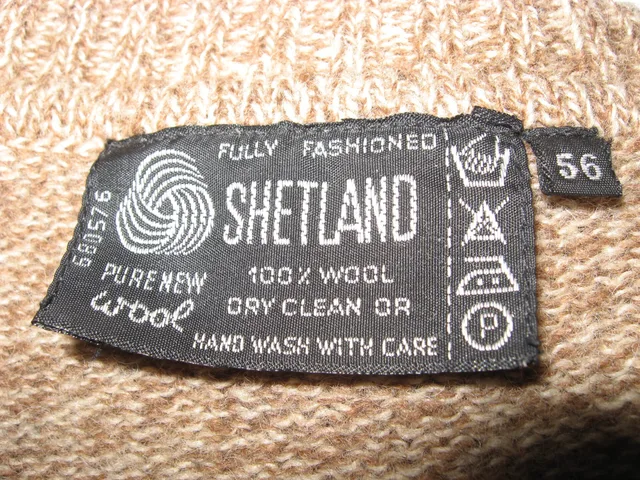
A consumer textile article sold in Canada normally needs fibre content expressed as a percentage by mass, using prescribed generic fibre names, plus the name and address of the dealer. The dealer is the party that labels the article or has it labelled.
Label line vs bio-based claim
Label element
- Fibre content
- Required, % by mass
- Generic names
- Prescribed names only
- Dealer identity
- Name and address
- Bio-based %
- Not required
Bio-based claim
- Fibre content
- Not a fibre name
- Generic names
- Trade names alone fail
- Dealer identity
- Liability stays with dealer
- Bio-based %
- Needs substantiation
For a bio-based garment, the fibre content line still reads as a fibre: polyester, or a named generic fibre where one exists. "Bio-based" is not a generic fibre name under the regulations. It belongs in supporting marketing language, where it must be truthful and verifiable.
| What the label shows | Where it comes from | What it does not do |
|---|---|---|
| Fibre content by percentage | Textile Labelling and Advertising Regulations | Does not certify the feedstock origin |
| Generic fibre names | Prescribed names in the regulations | Does not accept trade names alone |
| Dealer name and address | Textile Labelling Act | Does not shift liability to the factory |
| Bio-based percentage, if claimed | Competition Act substantiation | Does not replace the fibre line |
If a shirt is 60 per cent conventional polyester and 40 per cent polyester made from plant-derived feedstock, the fibre content is still polyester. The bio-based share is a separate statement, and it needs evidence behind it.
A bio-based claim without a test report or a supplier mass balance document is the single most common weakness in Canadian apparel marketing.
Records to keep behind a bio-based claim
Substantiation is the whole game. The Bureau expects a claim to be backed by adequate and proper testing, done before the claim is made, using a method that fits what is being claimed.
For bio-based content, that usually means a radiocarbon-based measurement of biobased carbon content, run by a laboratory on the finished material or a representative sample. Supplier declarations alone are weaker, though they help.
Claim substantiation file
- Test report showing measured bio-based share
- Chain of custody or mass balance records
- Supplier declaration naming feedstock and route
- Exact wording used on tag and page
- Dated file showing pre-publication check
Keep these for as long as the article is sold plus a reasonable period after. If a claim is challenged, the burden falls on the advertiser to show it was supported when it was made.
The same discipline applies to compostability wording, often paired with bio-based content.
Canada has no federal compostability labeling rule for textiles. A garment that claims to break down in a backyard bin needs its own evidence, usually against a recognized specification.
Checking the checks that matter most for biofabricated materials helps separate a documented claim from a hopeful one.
What happens if you do not comply
Non-compliance runs on two tracks.
On the labelling track, a textile article that lacks the required fibre content or dealer information can be refused entry at the border or pulled from sale. The Act carries penalties for labelling offences, and the regulations allow inspectors to examine articles and demand records.
On the advertising track, the Competition Bureau can seek penalties for false or misleading representations. For a bio-based percentage that cannot be supported, the exposure is a misleading advertising finding, not a labelling fine. The Bureau has taken action against environmental claims across product categories, and apparel is not exempt.
Retailers in Ontario and Quebec have felt this most in the private-label channel, where a buyer writes the copy and the factory supplies the fabric. The buyer is the dealer. The buyer answers for the claim.
Where the rules differ by place
Canadian requirements diverge from United States practice in ways that matter for cross-border sellers.
The US Federal Trade Commission's textile rules allow certain fibre trademarks and have their own disclosure scheme, and the USDA BioPreferred program runs a separate voluntary label for biobased products. Neither substitutes for Canadian compliance. A garment labelled for the US market can still fail Canadian fibre content or dealer identity rules.
Within Canada, the federal rules apply nationwide. Provincial consumer protection statutes, such as Ontario's Consumer Protection Act and Quebec's Consumer Protection Act, add rules on misleading representations in consumer transactions. Quebec's French language requirements also affect how a label and its claims are presented to consumers in that province.
For a brand selling into both provinces, the practical approach is one label that satisfies the federal rules and one claim file that satisfies both the Bureau and provincial consumer law. Working through how to evaluate sustainable fashion before committing to it keeps the marketing language tied to what the file can actually prove.