Reviews
Part of 9 things about garment durability and care worth your time
Garment Durability and Care Comparison Guide
This garment durability and care comparison covers wash, dry, and finish routes, US cost figures, and care guidance for bio-based fibers.
What to take away
- Every garment durability and care comparison starts with the whole garment: the gentlest-looking process is not automatically the safest one.
- Wash, dry, and finishing choices should be compared as one care route.
- Construction, color, trim, finish, soil, and user access can outweigh fiber type.
- A label needs evidence from a production-equivalent garment, not intuition about a fabric.
- The best option is the least restrictive practical route that controls the important risks.
- Default when your own tests give no answermachine wash a cotton or cotton-blend shirt on a gentle cycle at 85 to 105 degrees F, then line dry.
A useful care comparison starts with the job: remove expected soil while keeping the garment safe, functional, correctly sized, and acceptable in appearance. It must also be realistic for the people expected to own it. A route that protects a delicate trim but requires unavailable professional care is not a complete success.
The options below are not fixed recipes. A typical wash specification for a cotton shirt is a normal or gentle cycle at 85 to 105 degrees F (30 to 40 C) with a medium load, then low tumble heat.
Start with this named comparison set, then verify current formulations, prices, and availability.
Named 2027 option
Care route
- Tide Free & Gentle or Persil ProClean Sensitive Skin
- Home machine washing
- Woolite Delicates or Ecover Delicate Wash
- Hand washing or gentle cycle
- Miele W1, LG WM4000, or Speed Queen TR7 washer
- Controlled washing and drying
- Dryel At-Home Dry Cleaner Kit
- Home solvent-style refresh
- ZIPS Dry Cleaners, Jeeves New York, or Meurice Garment Care
- Professional dry cleaning
- Miele Professional PW 6065 with Kreussler Soromax
- Professional wet cleaning
Typical United States figure
- Tide Free & Gentle or Persil ProClean Sensitive Skin
- $0.50 to $1.00 per load
- Woolite Delicates or Ecover Delicate Wash
- $0.10 to $0.30 per wash
- Miele W1, LG WM4000, or Speed Queen TR7 washer
- $0.25 to $0.50 per tumble dry load
- Dryel At-Home Dry Cleaner Kit
- $0.50 to $1.00 per garment
- ZIPS Dry Cleaners, Jeeves New York, or Meurice Garment Care
- $3 to $8 per shirt, $12 to $25 per jacket or dress
- Miele Professional PW 6065 with Kreussler Soromax
- $10 to $25 per garment
For concrete arms you can set up and run, start with these: Tide Free & Gentle against Persil ProClean Sensitive Skin for home washing; Miele W1 against LG WM4000 and Speed Queen TR7 for controlled cleaning; Dryel against ZIPS, Jeeves, and Meurice for solvent-style care; and Miele Professional PW 6065 with Kreussler Soromax against household hand washing for wet cleaning.
Professional processes vary, and two garments with the same fiber label can behave differently because of yarn, structure, dye, finish, lining, adhesive, print, or construction. The system-level view behind that warning comes from the durability and care guide.
Record the garment facts first
Start with these five facts, because they set which routes are even possible:
- Fiber and blend content of every component, including lining, trim, and thread.
- Constructionseam type, stitch density, bonded zones, and how the shape is held.
- Colordye class, shade depth, and contrast panels that may bleed.
- Applied partsprints, coatings, beads, zips, and finishes added after construction.
- Expected soil, plus who will do the washing and where.
Five facts to record first
- Likely soils and odors
- Narrowest-tolerance component
- Changes that end useful wear
- Care frequency
- Services and equipment access
Fabric selection affects the answer, but only one layer: the FTC Care Labeling Rule, 16 CFR Part 423, and its definitions of standard care terms fix what machine wash and dryclean promise. If a label names no water temperature, hot water up to 145 degrees F counts as regular use.
A definition does not establish a care label for any product. Use the defined terms to form test questions, then verify the finished garment.
Wet-cleaning routes
Standard machine washing
Machine washing is accessible and repeatable for many everyday products. It combines water, detergent chemistry, movement, time, load contact, rinsing, and extraction. Those variables can remove soil well, but they may also cause shrinkage, dye transfer, pilling, snagging, seam stress, coating loss, or trim damage. A cotton T-shirt or a cotton-blend work shirt is the usual candidate.
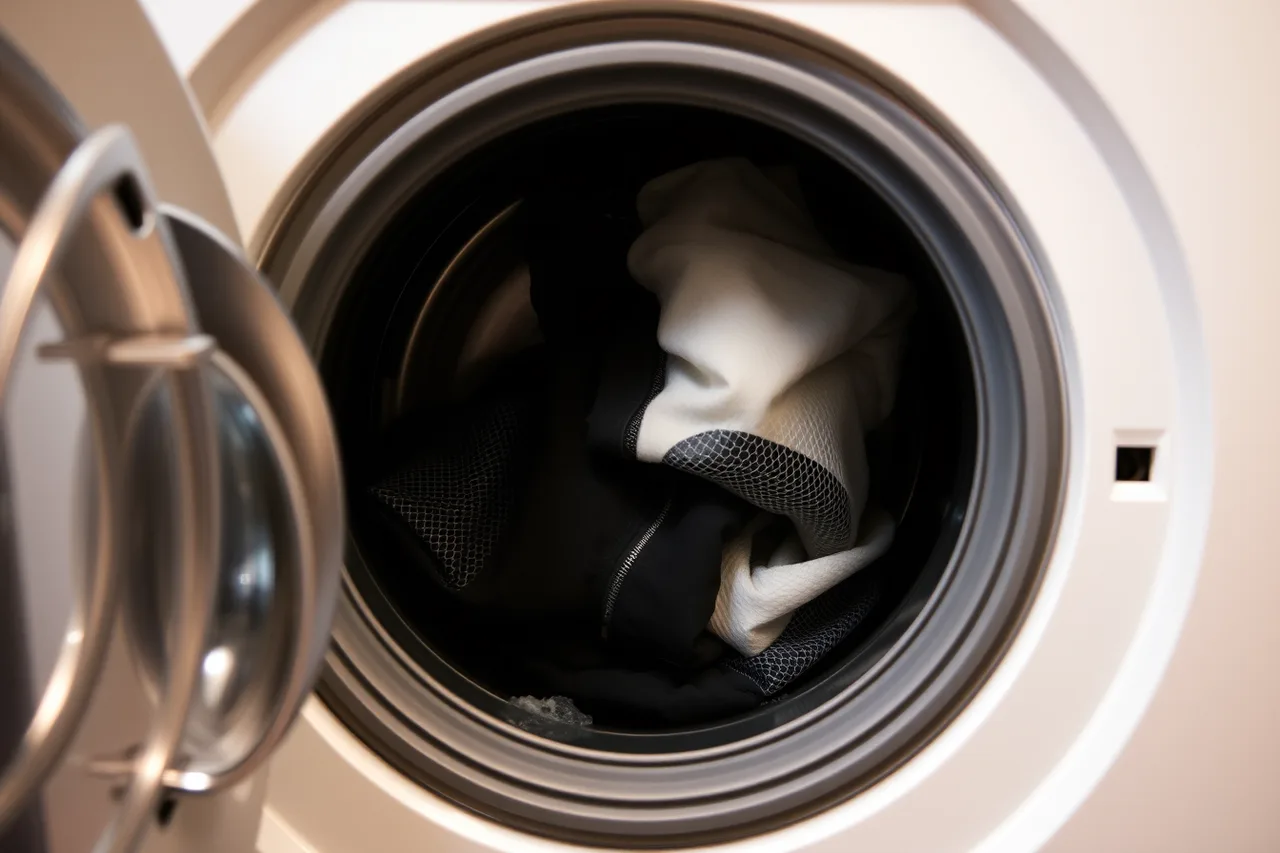
Choose it when the complete garment tolerates the intended cycle and common loading conditions. Close fasteners if their design calls for it, separate incompatible colors, and define any required bag or load limit. "Machine wash" without temperature, cycle, and drying evidence leaves important decisions unresolved.
Cost is low and predictable: a household wash load in the United States typically runs about $0.50 to $1.00 in energy, water, and detergent.
Hand washing
Hand washing can reduce mechanical action, but it is not a standardized gentle process. Soaking may promote dye migration. Lifting a heavy wet knit can stretch it. Twisting can distort yarns, seams, and bonded layers. Detergent concentration and water temperature are hard to reproduce. A wool sweater or a silk blouse is the usual candidate.
Choose hand washing only when evidence supports it and the instructions explain necessary handling. If ordinary variation creates a high chance of damage, redesign may be more reliable than a fragile care requirement.
Direct cost is small: a basin, water, and a few milliliters of detergent are the only inputs. The real cost is time, typically 15 to 30 minutes of handling per garment.
Professional wet cleaning
Professional wet cleaning uses controlled water-based equipment, chemistry, drying, and finishing. It may suit some products that need more control than household washing. Availability, cost, operator skill, and finishing needs affect practicality. It is not interchangeable with home hand washing simply because both use water. A lined linen blazer is a typical candidate.
Typical prices in the United States run about $10 to $25 per garment, close to dry cleaning rates and higher in dense city markets.
Solvent-based professional cleaning
Professional dry cleaning can avoid some water-related dimensional or dye problems, but solvents, heat, tumbling, spotting agents, and finishing can affect prints, adhesives, coatings, beads, plastics, and trims. "Dry clean" also describes a professional service, not one identical exposure everywhere. A wool suit jacket or a silk dress is the usual candidate.
Common professional solvents include perchloroethylene, hydrocarbon solvents, and silicone-based (D5) alternatives. Ask which solvent and process a shop uses, because each one interacts differently with plastics, coatings, prints, and trims.
Consider it when the garment needs professional soil removal or finishing and the complete construction has been evaluated for the permitted process. A dry-clean-only label should not be used to cover missing wash evidence.
Typical United States prices are about $3 to $8 for a laundered and pressed shirt and $12 to $25 for a jacket or dress.
Drying routes
Drying often decides whether a wash route succeeds.
Main strengths
- Tumble dry
- Fast, accessible, controlled in suitable equipment
- Flat dry
- Supports shape in some knits
- Hang or line dry
- Avoids tumble action and may use little energy
- Professional finish
- Skilled reshaping and pressing
Main risks
- Tumble dry
- Heat, movement, shrinkage, abrasion, print or elastic damage
- Flat dry
- Slow drying, space, color transfer to surface
- Hang or line dry
- Stretching, peg marks, sunlight change, stiffness
- Professional finish
- Cost, access, heat or pressure damage
Questions to resolve
- Tumble dry
- Temperature, time, load, endpoint
- Flat dry
- Reshaping, airflow, support surface
- Hang or line dry
- Garment weight, hanger shape, shade
- Professional finish
- Required equipment and operator limits
Energy and service cost differ by route. A tumble dry cycle typically adds about $0.25 to $0.50 per load in the United States, line and flat drying add almost nothing, and a professional finish typically costs $5 to $15 per garment.
Do not compare energy, damage, and convenience as if they were the same measure. A low-energy route that causes early replacement may be a poor durability choice. A fast route may be unsuitable if repeated heat destroys elastic recovery.
Finishing and spot treatment
Ironing can restore appearance and help a garment remain wearable, but heat, steam, pressure, and contact time affect fibers, dyes, coatings, prints, and shine. Test the complete decorative area and specify whether pressing must occur from the reverse or through a cloth. How specific finishes tolerate heat and solvents is mapped in the dye and finish route comparison.
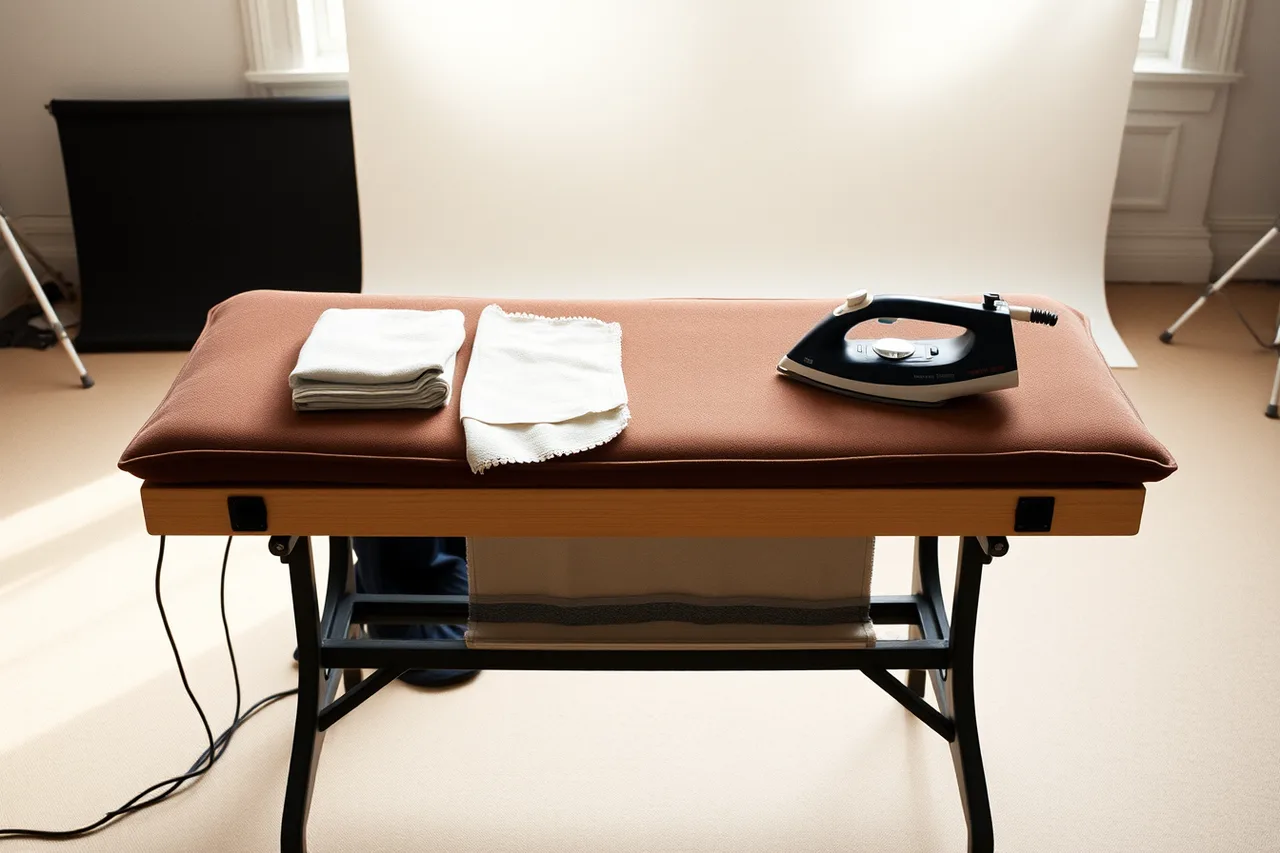
Finishing cost splits between the home and the service. Home pressing costs a few cents of electricity, while professional pressing typically runs $3 to $10 per garment, and professional spotting is usually included in the cleaning price.
Spot cleaning limits exposure to a small area. It can also leave a ring, spread soil, remove finish, or shift color. State which agents and methods were evaluated. Never advise mixing cleaning chemicals.
North Carolina State University's physical textile testing laboratory lists separate evaluations for properties such as abrasion, pilling, tearing, dimensional change, and crocking. Each property has its own method: AATCC 135 and ISO 6330 for dimensional change after home laundering, ASTM D4970 for pilling, ASTM D1424 for tearing, ASTM D5034 for breaking strength, ASTM D4157 for abrasion, and AATCC 8 for crocking. Those methods illustrate why no single "durability test" can settle every care choice. Select measurements that match the predicted failure, use current methods, and apply product-specific limits.
Scoring routes against weighted criteria
Score each complete route from 1 to 5, where 5 is best, then apply weights agreed before testing.
| Criterion | Suggested question | Example weight |
|---|---|---|
| Safety and compliance | Does the route preserve mandatory performance? | Gate, not scored |
| Soil removal | Does it remove expected soil and odor? | 20% |
| Physical durability | What happens to seams, surface, shape, and trim? | 25% |
| Color and appearance | Is change within the stated tolerance? | 15% |
| Function | Are coatings, stretch, or protective claims retained? | 15% |
| User access | Can the intended user follow it correctly? | 10% |
| Cost and time | Is repeated care reasonable? | 5% |
| Resource use | What water, energy, chemistry, and transport are required? | 10% |
A safety failure stops the option regardless of its total. Scores should come from methods, specimens, observations, and use assumptions, not marketing preference. Run sensitivity checks when two routes are close. A small change in an arbitrary weight should not disguise an unresolved technical risk. The measurements feeding the scores come from the durability evaluation steps.
Match decisions to garment types
- A structured lined jacket, such as a wool-blend blazer with a fused front, may need controlled finishing or professional wet cleaning to keep shape.
- A washable work shirt, such as a cotton oxford or a cotton and polyester blend, needs soil removal, frequent-cycle stability, and accessible care.
- A heavy knit, such as a lambswool crewneck, needs support during drying and evidence on growth or recovery.
- A printed performance top, such as a polyester and spandex running shirt with a wicking finish, needs checks for odor removal, print adhesion, stretch, and functional finish after repeated care.
- A mixed-material fashion piece, such as a jacket with a leather-trimmed collar, needs testing at every material contact and bonded zone.
These are starting questions, not final labels. When care cost starts to rival replacement, the jacket decision example shows how to frame the call.
Care decisions for bio-based and recycled fibers
Bio-based fibers do not share one care profile, but several of them are more sensitive to heat, abrasion, and repeated washing than their labels suggest. Run the routes above against these materials directly instead of assuming that a bio-based label means a gentle garment.
- Lyocell, including TENCEL-branded lyocell:a cellulosic fiber spun in a closed-loop solvent process. It pills and fuzzes under abrasion, so a cool gentle wash, a reduced load, and line or flat drying protect it better than a hot cycle and hot tumble drying.
- Modal and bamboo lyocell:cellulosic fibers with their own shrinkage and pilling behavior. Test them on the hand-washing or gentle-wash arms before you rely on a standard cycle.
- Recycled cotton:mechanically recycled cotton has shorter fibers than virgin cotton, so yarns can be weaker and shed more lint. Wash cool, wash less often, and line dry.
- Bio-based polyester, including PLA:polymers that behave much like conventional polyester, including its sensitivity to heat. Keep them out of high-heat tumble drying and hot pressing.
Because washing is where fibers, finishes, and lint move most, compare these materials on the same wash, dry, and finish arms you use for the rest of a range, and record the outcomes with the garment facts from the checklist above.
Choosing among the surviving routes
Reject any route that fails law, safety, or the garment's required function. Score the survivors with the weights above and write one line on why each rejected route failed.
Reopen the comparison whenever the fabric, color, trim, supplier, factory, finish, construction, intended market, or method changes.
Repair, storage, and end of life
Care is only one lever on how long a garment lasts. Restitching seams, replacing buttons and zips, and reinforcing stress points, plus flat, dry, dark storage, extend wear. These habits keep bio-based and recycled fibers such as lyocell or recycled cotton in use for longer, which is the point of comparing care routes in the first place.
Care choices also shape what happens at the end of life. Repeated hot washing, hot tumble drying, and aggressive finishing break down fibers, finishes, and bonded zones, and a garment that fails early is more likely to be discarded than repaired. Choosing the least aggressive route that still controls the expected soil keeps a bio-based or recycled garment intact long enough to be resold, handed on, or sent to a take-back or textile recycling program, and it avoids the impact of a replacement garment. Before you assume a worn item can be recycled, check the label and the seller's take-back or recycling route, because blends, trims, and finishes often decide what a recycler can accept.
Common questions
Is hand washing always gentler than a machine cycle?
No. Long soaking, concentrated detergent, twisting, and unsupported lifting can cause damage. Compare defined procedures on the complete garment.
Does dry cleaning prevent shrinkage?
Not universally. A garment can change through solvent exposure, heat, movement, finishing, or interaction between components.
Can one care route fit every colorway?
Not automatically. Dye chemistry, shade depth, contrast panels, and trim may change staining or fading risk.
Should air drying replace tumble drying?
Only when the garment tolerates the chosen air-drying method and the user can follow it. Heavy knits may stretch when hung, and slow drying can create other problems.
What breaks a tie between two passing options?
Compare access, repeated cost, soil removal, resource use, user error, and performance margins. Keep the evidence and assumptions with the decision.